Usual hours and prices, checked 2026-10-06 against the sources under “What this place is”. They can change for holidays and events — confirm before you go. Official site
Our guide
The Neodani Fault in Gifu is the fault whose rupture caused the Mino–Owari (Nōbi) earthquake of 1891, the largest earthquake ever recorded inland in Japan. The rupture ran for more than 80 km and shifted the ground 6 m vertically and 8 m sideways.
Midori Station is about 150 m from the point this page is mapped to. We have not checked what can be seen here, opening hours or fees.
Written by japan-spots.com (2026-09-22) from the sources credited on this page. Distances are straight lines between map positions.
Photos
Photos from Wikimedia Commons, each under its own licence — see credits
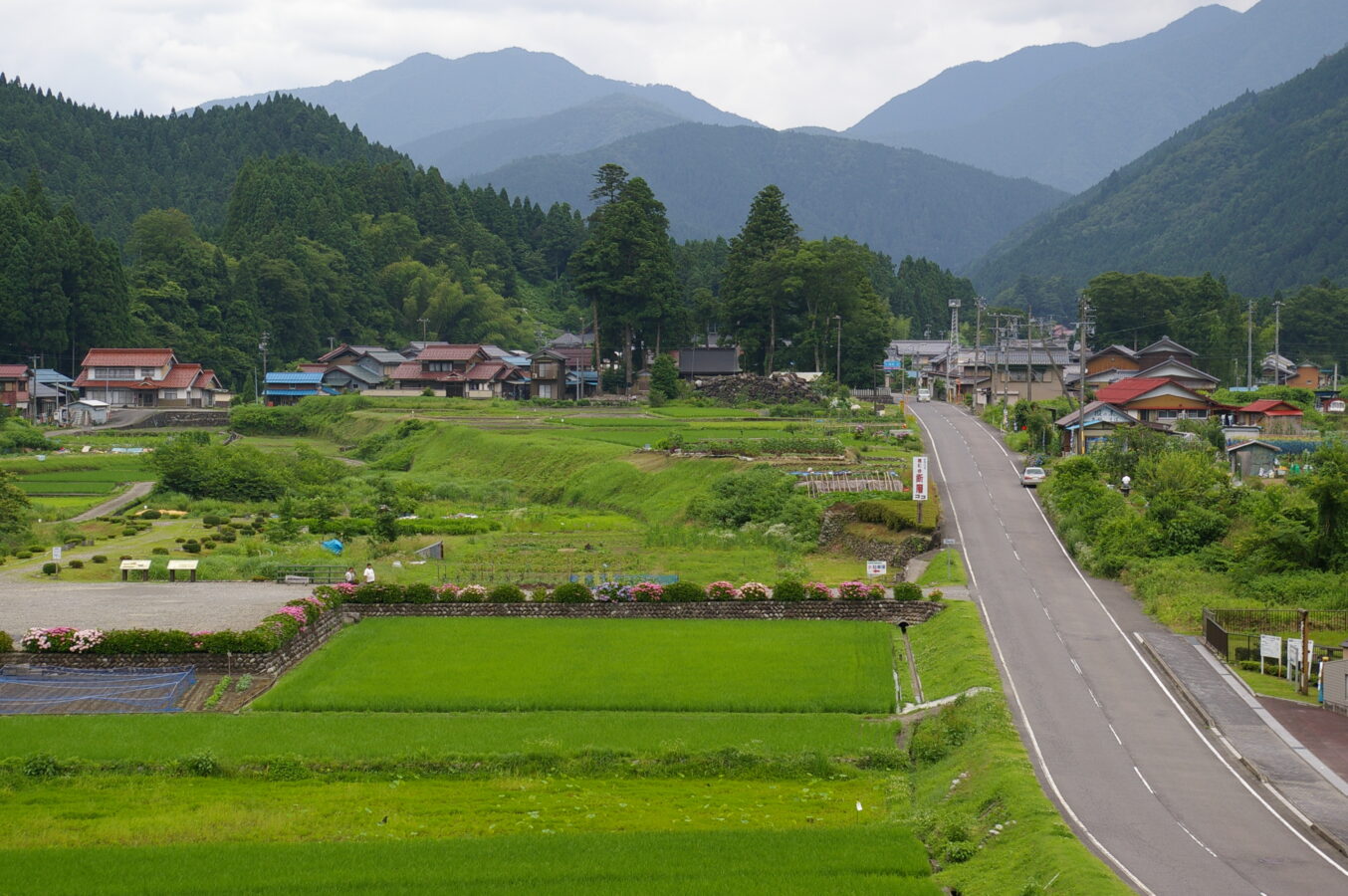
- Neodani fault — Tomomarusan · CC BY 2.5 · source · resized
- Trench of the Neodani Fault at Midori (northwestern side) — ZCU · CC BY-SA 3.0 · source · resized
- PSM V47 D323 Cause of the great earthquake in central japan 1891 — Koto, Bunjiro., 1893, On the cause of the great earthquake in central Japan, J. Coll. of Sci. Imp. Univ. Tokyo, 5 295-353. · Public domain · source · resized
- Neodani Fault s2 — Alpsdake · CC BY-SA 4.0 · source · resized
- Neodani Fault s2 cropped — Alpsdake · CC BY-SA 4.0 · source · resized
- Neodani Fault 20220401 — 先従隗始 · CC0 · source · resized
- Neodani Fault 20230624 02 — 先従隗始 · CC0 · source · resized
- Neodani Fault 20230624 01 — 先従隗始 · CC0 · source · resized
- Neodani Fault 20230624 04 — 先従隗始 · CC0 · source · resized
- Neodani Fault 20230624 05 — 先従隗始 · CC0 · source · resized
What this place is
Neodani Fault (根尾谷断層, Neodani Dansō) is a left lateral slip fault in central Japan, Gifu Prefecture, which ruptured causing the 1891 Mino–Owari earthquake (otherwise known as the Nōbi earthquake) in 1891. It caused a 6m vertical offset and 8m left lateral offset, and ruptured over 80 km. The quake was the largest ever recorded in inland Japan.
Visitor information checked: 2026-10-06 · Official visitor information
Background text from Wikipedia (CC BY-SA 4.0)
What to expect at this type of place: Landmark
Nearby station
Nearby station: Midori, about 150 m from the spot in a straight line.
Worked out on 2026-09-14 from this place’s map position, using HeartRails Express station data and station names from Wikidata. The distance is a straight line, not a walking route, and says nothing about buses, transfers or timetables — plan the trip on Google Maps.
Traveler reviews
No reviews yet — be the first to share how it went.