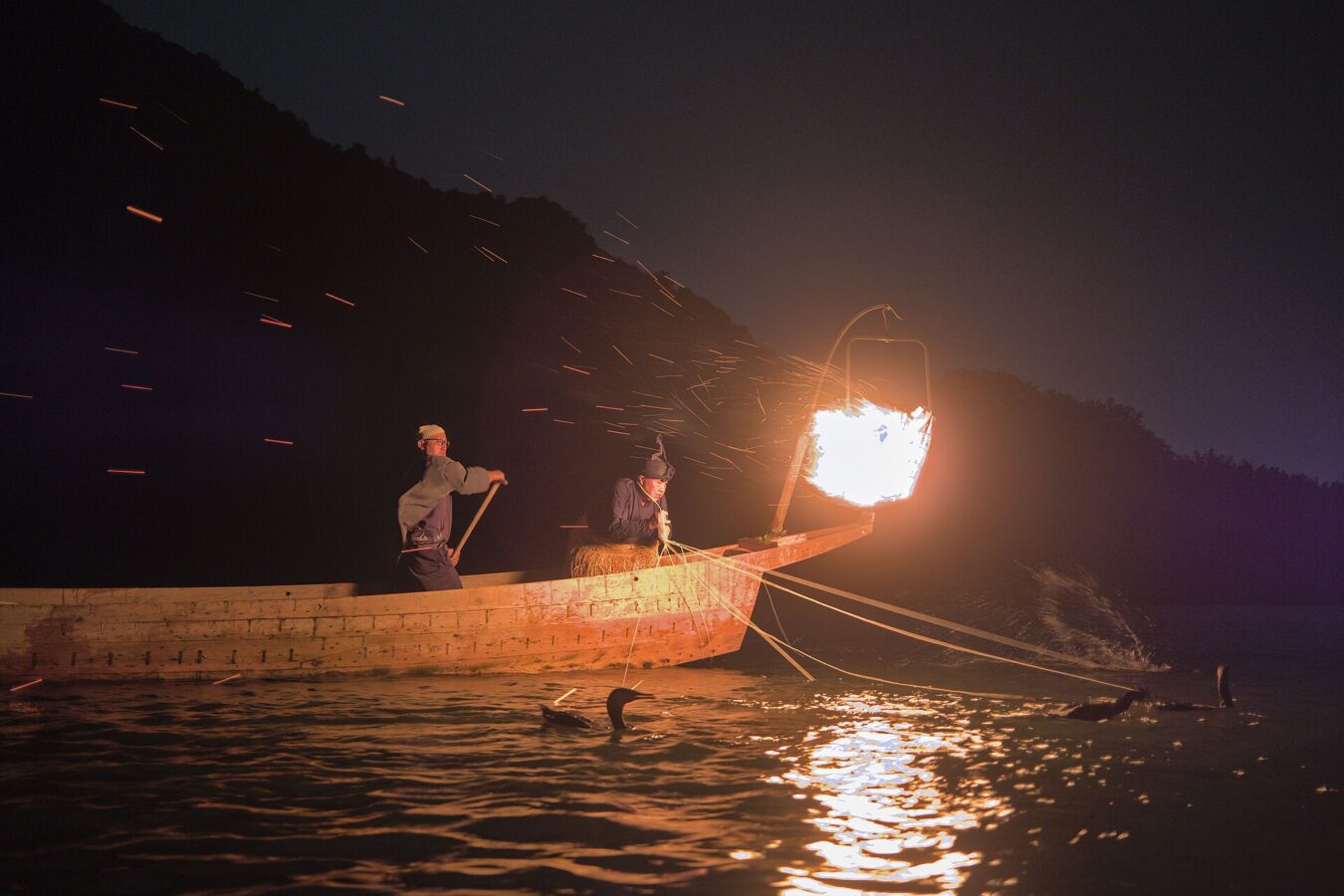
Nagara River Cormorant Fishing
長良川鵜飼
Usual hours and prices, checked 2026-10-06 against the sources under “What this place is”. They can change for holidays and events — confirm before you go. Official site
Our guide
Cormorant fishing on the Nagara River has played a vital part in the history of the city of Gifu. Over its long history it has changed from a way of making a living, to a profitable industry, to a major draw for visitors.
The season runs each year from 11 May to 15 October, except on days of high water and on the night of the harvest moon. We have not checked times, fares or how to book a viewing boat, so look for local information before you go. Gifu Castle and Mount Kinka are each about 1 km away in a straight line.
Written by japan-spots.com (2026-09-22) from the sources credited on this page. Distances are straight lines between map positions.
Photos
Photos from Wikimedia Commons, each under its own licence — see credits
- Cormorant fishing on the Nagara River - Jul 7, 2025 — Ludger Heide · CC BY-SA 4.0 · source · resized
- Ukai Gifu Nagaragawa U01 — Hide-sp · CC BY-SA 3.0 · source · resized
- Ukai Gifu Nagaragawa 05 — Hide-sp · CC BY-SA 3.0 · source · resized
- Ukai Gifu Nagaragawa 04 — Hide-sp · CC BY-SA 3.0 · source · resized
- Ukai Gifu Nagaragawa 03 — Hide-sp · CC BY-SA 3.0 · source · resized
- Ukai Gifu Nagaragawa 02 — Hide-sp · CC BY-SA 3.0 · source · resized
- Ukai CFO 01 — Hide-sp · CC BY-SA 3.0 · source · resized
- Nagaragawa ukai 02 — Asacyan · CC BY-SA 3.0 · source · resized
- Nagaragawa ukai 01 — Asacyan · CC BY-SA 3.0 · source · resized
- Kisokaido54 Godo — Keisai Eisen · Public domain · source · resized
What this place is
Cormorant fishing on the Nagara River (ぎふ長良川の鵜飼, Gifu Nagaragawa no Ukai) has played a vital role in the history of the city of Gifu, Gifu Prefecture, Japan. Throughout its long history, it evolved from a means to live, to a profitable industry, to a major tourist draw. It runs from May 11 to October 15 of each year (except when the river level is high and during the harvest moon).
Visitor information checked: 2026-10-06 · Gifu ukai: 2026 schedule and fares
Background text from Wikipedia (CC BY-SA 4.0)
What to expect at this type of place: Lakes & falls
Getting there
We do not have step-by-step transit directions for this spot yet. Open the location on Google Maps for routes from where you are staying.
Traveler reviews
No reviews yet — be the first to share how it went.