No opening hours or admission are shown: the sources we checked on 2026-09-13 were used for the route only. Check the official site
Our guide
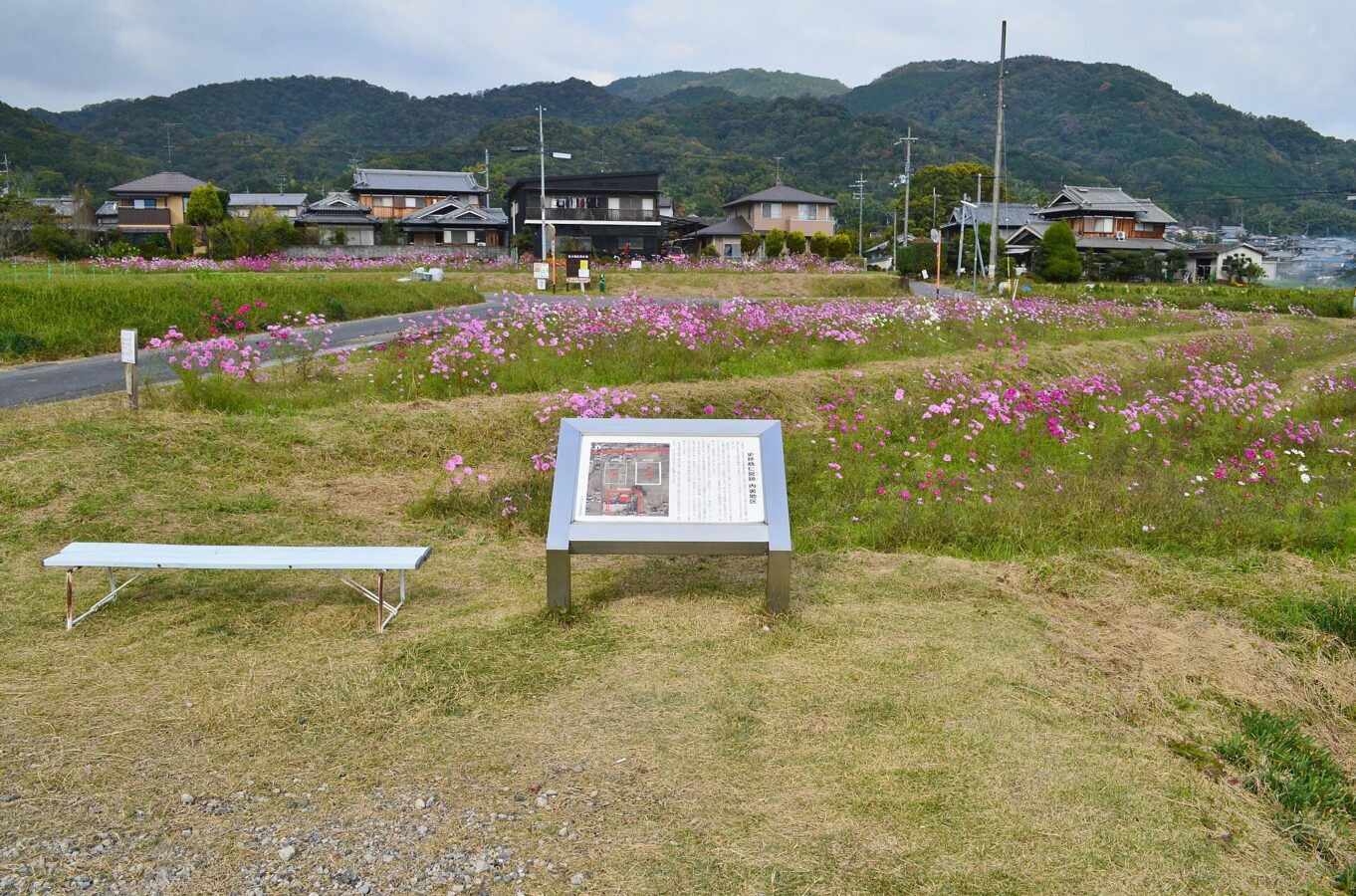
Kuni-kyō was the capital of Japan from 740 to 744. Its palace stood in what is now Kamo, in the city of Kizugawa, Kyoto Prefecture, and its ruins overlap those of Yamashiro Kokubun-ji; the two were designated together as a National Historic Site in 1957, and the protected area was widened in 2007.
Our checked record says the way in is JR Kamo Station, with journey times from Nara, Kyoto and Tennōji in “Plan your visit” below — but it does not give the way from the station to the site, so check a map for the last stretch.
Written by japan-spots.com (2026-09-22) from the sources credited on this page. Distances are straight lines between map positions.
Photos
Photos from Wikimedia Commons, each under its own licence — see credits
What this place is
Kuni-kyō (恭仁京; or Kuni no miyako) was the capital of Japan between 740 and 744, with its imperial palace (恭仁宮 Kuni-kyū or Kuni no miya) built in what is now the Kamo neighborhood of the city of Kizugawa in Kyoto Prefecture. The ruins of the palace overlap with the ruins of Yamashiro Kokubun-ji (山城国分寺), and both were collectively designated as a National Historic Site of Japan in 1957, with the area under protection expanded in 2007.
Visitor information checked: 2026-09-13 · Kuni Palace Site (Kyoto Prefectural Board of Education): access
Background text from Wikipedia (CC BY-SA 4.0)
What to expect at this type of place: Landmark
Getting there by public transport
- The way in is JR Kamo Station: from JR Nara about 15 minutes (trains for Kamo), from Kyoto about 1 hour (change at Kizu), from Tennōji about 50 minutes.
- The page does not give the way from the station to the site.
Route checked: 2026-09-13 · Kuni Palace Site (Kyoto Prefectural Board of Education): access · Timetables change — check the operator before you travel.
Traveler reviews
No reviews yet — be the first to share how it went.