Usual hours and prices, checked 2026-10-06 against the sources under “What this place is”. They can change for holidays and events — confirm before you go. Official site
Our guide
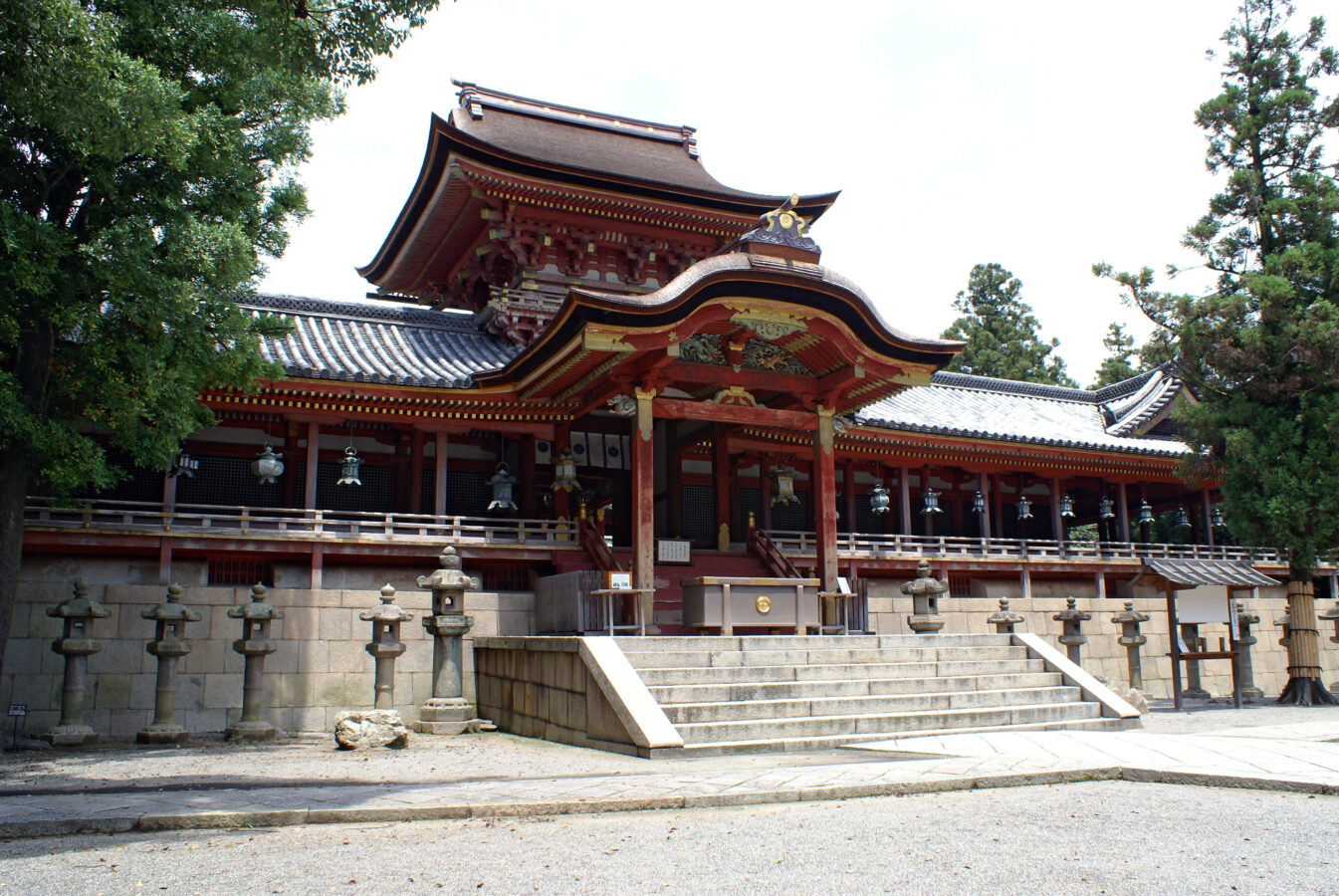
Iwashimizu Hachimangū, in the city of Yawata, Kyoto Prefecture, is one of the Twenty-Two Shrines of the Heian-period ranking and, with Ise, one of the two ancestral shrines of the imperial family. It is also counted among the three major Hachiman shrines, with Usa Jingū and either Hakozaki Shrine or Tsurugaoka Hachimangū. Ten of its buildings, including the main hall, are National Treasures, and the grounds became a National Historic Site in January 2012.
Cable-Hachimangū-Sanjō Station on the Keihan Cable Line is about 150 m away in a straight line. Minase Shrine is about 2.5 km off.
Written by japan-spots.com (2026-09-22) from the sources credited on this page. Distances are straight lines between map positions.
Photos
Photos from Wikimedia Commons, each under its own licence — see credits
- Iwashimizu hachimangu07s3200 — 663highland · CC BY 2.5 · source · resized
- Iwashimizu hachimangu04s3200 — 663highland · CC BY 2.5 · source · resized
- Iwashimizu Hachimangu setummasha5 — KENPEI · CC BY-SA 3.0 · source · resized
- Iwashimizu Hachimangu setummasha3 — KENPEI · CC BY-SA 3.0 · source · resized
- Iwashimizu Hachimangu setummasha2 — KENPEI · CC BY-SA 3.0 · source · resized
- Iwashimizu Hachimangu setummasha1 — KENPEI · CC BY-SA 3.0 · source · resized
- Iwashimizu Hachimangu azekura — KENPEI · CC BY-SA 3.0 · source · resized
- Iwashimizu Hachimangu - Wakamiyasha — Yanajin33 · CC BY-SA 3.0 · source · resized
- Iwashimizu Hachimangu - Tonguden-b — Original uploader was Yanajin33 (Edited by 663h ) · CC BY-SA 3.0 · source · resized
- Iwashimizu Hachimangu - Tongu Ichi no Torii — Yanajin33 · CC BY-SA 3.0 · source · resized
What this place is
Iwashimizu Hachimangū (石清水八幡宮) is a Shinto shrine located in the city of Yawata in Kyoto Prefecture, Japan. It is one of the Twenty-Two Shrines in the Heian period ranked system of Shinto shrines, and along with the Ise Grand Shrine, one of the two royal ancestral shrines for the Imperial family. It is one of the three major Hachiman shrines, along with Usa Jingū in Usa, Oita and either Hakozaki Shrine (Higashi-ku, Fukuoka) or Tsurugaoka Hachiman-gū (Kamakura, Kanagawa). Ten buildings of the shrine, including the main hall, have been designated as National Treasures. In January 2012, the grounds of the shrine were designated as a National Historic Site
Visitor information checked: 2026-10-06 · Official visitor information · Official visitor information
Background text from Wikipedia (CC BY-SA 4.0)
What to expect at this type of place: Shrine
Nearby station
Nearby station: Cable-hachimangū-sanjō (Keihan Cable Line), about 150 m from the spot in a straight line.
Worked out on 2026-09-14 from this place’s map position, using HeartRails Express station data and station names from Wikidata. The distance is a straight line, not a walking route, and says nothing about buses, transfers or timetables — plan the trip on Google Maps.
Traveler reviews
No reviews yet — be the first to share how it went.