Opening hours and admission for this place have not been checked yet, so none are shown. Check the official site
Our guide
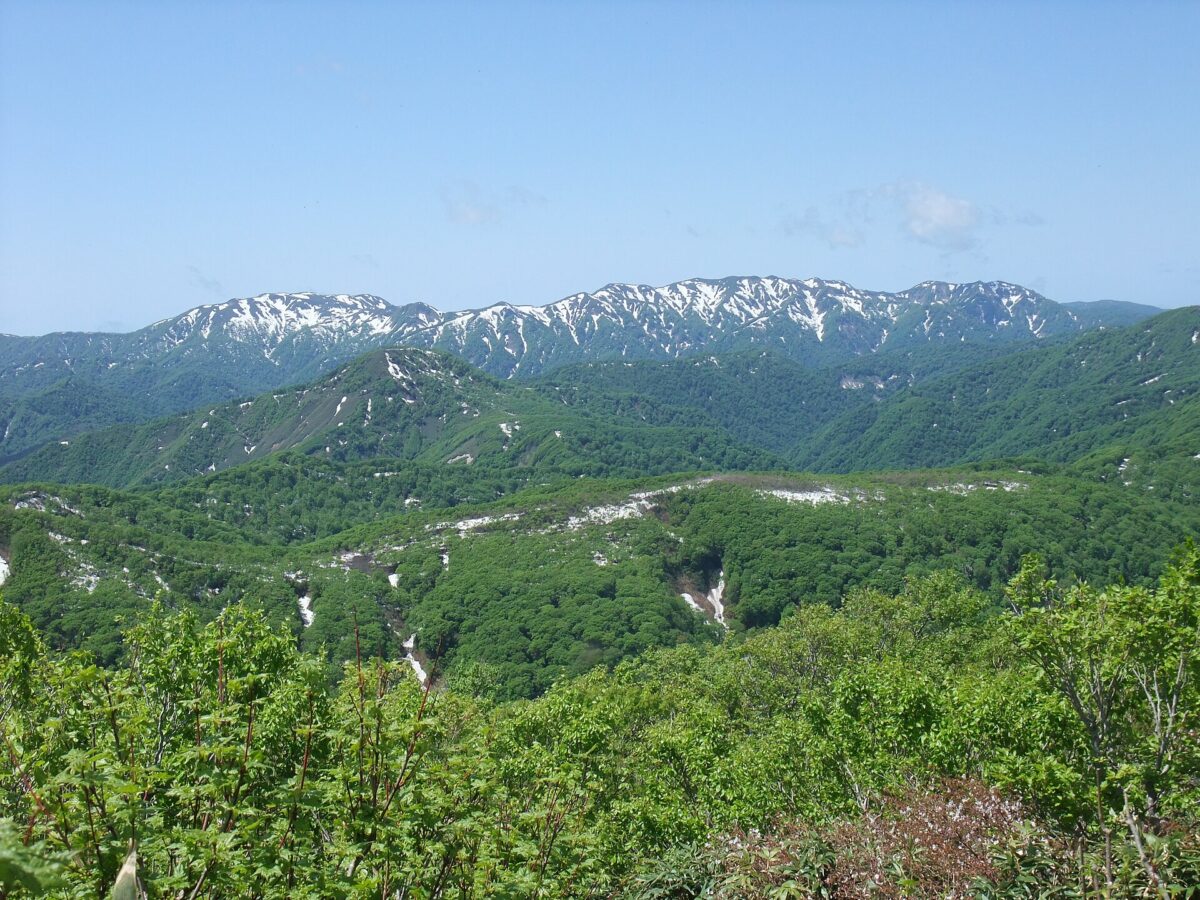
The Shirakami Mountains straddle Aomori and Akita prefectures, three-quarters of them in Aomori, and hold the last virgin forest of Japanese beech that once covered most of northern Japan. Of the whole 130,000-hectare area, a core of about 17,000 hectares became a UNESCO World Heritage Site in 1993 — one of Japan's first four, alongside Yakushima, Himeji Castle and the Buddhist monuments of Horyu-ji. Japanese black bears, Japanese serow, Japanese macaques and 87 kinds of birds live here.
This is wilderness. We have not checked trails, access points or a route, so plan with local information before you go.
Written by japan-spots.com (2026-09-22) from the sources credited on this page. Distances are straight lines between map positions.
Photos
Photos from Wikimedia Commons, each under its own licence — see credits
- Sirakami santi — らんで · CC BY-SA 3.0 · source · resized
- 白神山地登山者 — らんで · Public domain · source · resized
- 白神山地世界遺産核心地区 — らんで · Public domain · source · resized
- 白神山地の紅葉 — らんで · Public domain · source · resized
- Shirakami-sanchi — Stefan Ertmann · CC BY-SA 2.0 · source · resized
- Shirakami-sanchi seen from Noshiro at sunset time — 掬茶 · CC BY-SA 4.0 · source · resized
- Shirakami-sanchi World Heritage Conservation Center in Nishimeya, Aomori — 掬茶 · CC BY-SA 4.0 · source · resized
- Shirakami-Dake bothie — Indiana jo · CC BY-SA 4.0 · source · resized
- Shirakami Mountains at twilight 20210719 — 掬茶 · CC BY-SA 4.0 · source · resized
What this place is
The Shirakami Mountains (白神山地, 'White God Mountains') are a UNESCO World Heritage Site wilderness area in the Tōhoku region of northern Honshū, Japan. This mountainous area includes the last virgin forest of Japanese beech which once covered most of northern Japan. The area straddles both Akita and Aomori Prefectures, with three-fourths of it in Aomori Prefecture. Of the entire 130,000-hectare (500 sq mi) area, a tract covering 16,971-hectare (65.53 sq mi) was included in the list of World Heritage Sites in 1993.Fauna found in the area includes Japanese black bear, the Japanese serow, Japanese macaque and 87 species of birds. The Shirakami-Sanchi was one of the first sites entered on the World Heritage List in Japan, along with Yakushima, Himeji Castle, and Buddhist Monuments in the Hōryū-ji Area in 1993.
Background text adapted from Wikipedia (CC BY-SA 4.0)
What to expect at this type of place: Mountain
Getting there
We do not have step-by-step transit directions for this spot yet. Open the location on Google Maps for routes from where you are staying.
Traveler reviews
No reviews yet — be the first to share how it went.