Usual hours and prices, checked 2026-09-13 against the sources under “What this place is”. They can change for holidays and events — confirm before you go. Official site
AD 🛏️ Hotels nearby on Agoda ↗ About this link
Our guide
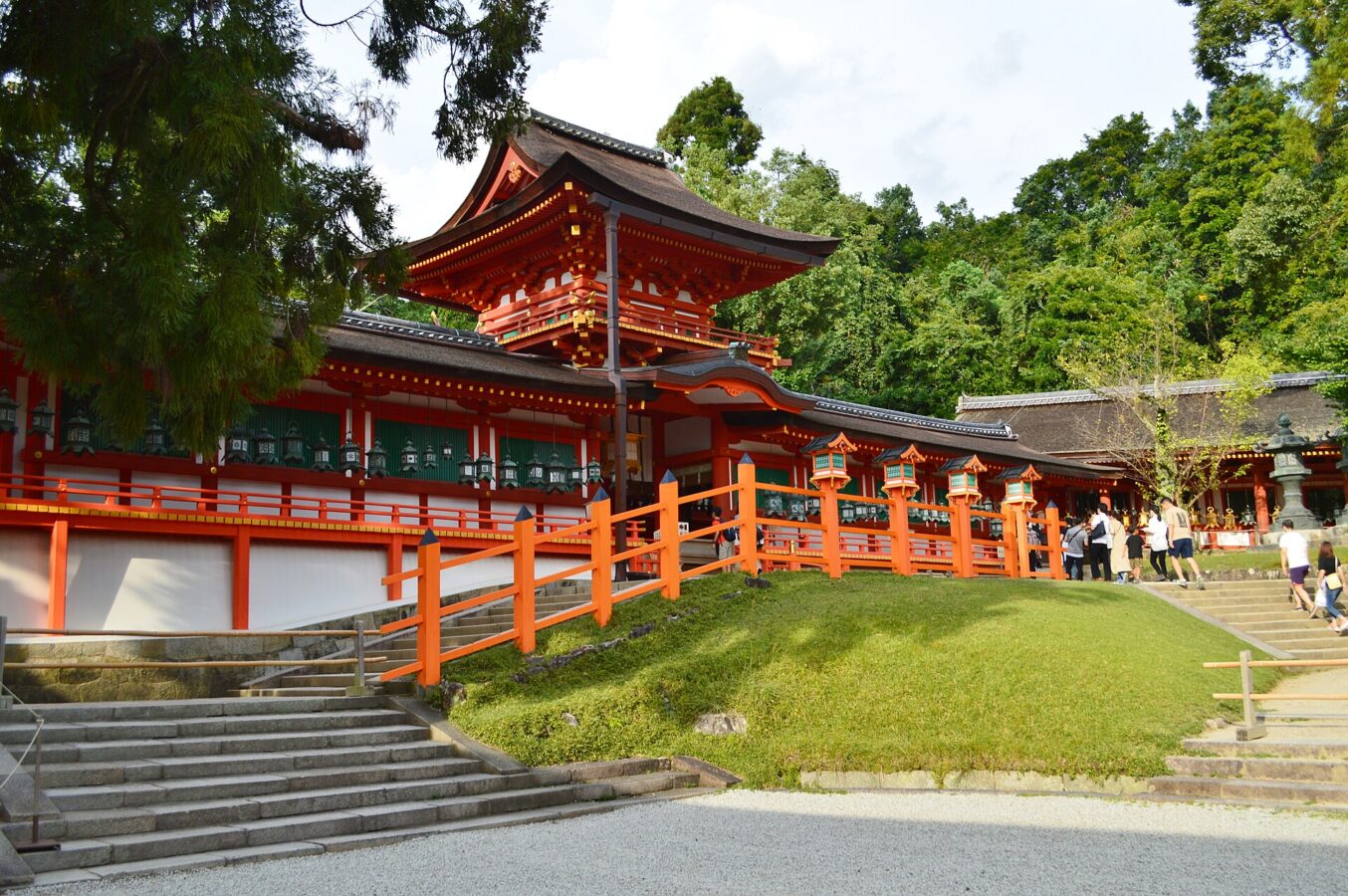
Kasuga Taisha was the shrine of the Fujiwara family, founded in 768 and rebuilt several times since. It is famous for its lanterns — many bronze lanterns inside, and many stone lanterns lining the approach — and its main sanctuary gave its name to a whole style of shrine building, Kasuga-zukuri. Its torii is one of the oldest in Shinto and helped shape the torii seen across much of Japan. Together with the Kasugayama Primeval Forest beside it, the shrine is part of the World Heritage Site of Ancient Nara.
The path to it runs through a deer park, where the deer roam freely and are held to be sacred messengers of the gods. The main prayer hall is free to visit; the inner sanctuary and the National Treasure Museum each charge. From JR or Kintetsu Nara Station, a Nara Kōtsū bus reaches the Kasuga Taisha Honden stop, right at the shrine, in about 11–15 minutes.
Nara Park is about 0.7 km away in a straight line, Todai-ji Great Buddha 1.1 km and Kofuku-ji 1.6 km.
Written by japan-spots.com (2026-09-22) from the sources credited on this page. Distances are straight lines between map positions.
Photos
Photos from Wikimedia Commons, each under its own licence — see credits
- Kasuga-taisha, chumon-1 — Saigen Jiro · CC0 · source · resized
- 2018 Ichi-no-Torii of Kasuga-taisha — NNDDD · CC BY-SA 4.0 · source · resized
- Armour red threads Kasuga shrine — Association of Cultural Properties · Public domain · source · resized
- Front view of Kuro-gawa Odoshi Domaru, Kasuga-taisha — Unknown author · Public domain · source · resized
- Kasuga-taisha, Enomoto-jinja, shaden — Saigen Jiro · CC0 · source · resized
- Kasuga-taisha, Hongu-jinja, youhaijo — Saigen Jiro · CC0 · source · resized
- Kasuga-taisha, Kii-jinja, honden — Saigen Jiro · CC0 · source · resized
- Kasuga-taisha, Mizuya-jinja, honden — Saigen Jiro · CC0 · source · resized
- Kasuga-taisha, Wakamiya-jinja, haiden — Saigen Jiro · CC0 · source · resized
What this place is
Kasuga-taisha (春日大社) is a Shinto shrine in Nara, Nara Prefecture, Japan. It is the shrine of the Fujiwara family, established in 768 CE and rebuilt several times over the centuries. The interior is famous for its many bronze lanterns, as well as the many stone lanterns that lead up to the shrine. The architectural style Kasuga-zukuri takes its name from Kasuga Shrine's honden (sanctuary). The Torii at Kasuga-taisha is one of the oldest in Shinto and helped influence the style of Torii seen across much of Japan. Kasuga Shrine, and the Kasugayama Primeval Forest near it, are registered as a UNESCO World Heritage Site as part of the "Historic Monuments of Ancient Nara".The path to Kasuga Shrine passes through a deer park. In the park, deer are able to roam freely and are believed to be sacred messengers of the Shinto gods that inhabit the shrine and surrounding mountainous terrain.
Visitor information checked: 2026-09-13 · Kasuga Taisha: visitor information
Background text from Wikipedia (CC BY-SA 4.0)
What to expect at this type of place: Shrine
Getting there by public transport
- From JR Nara Station (Yamatoji Line) or Kintetsu Nara Station: Nara Kōtsū bus bound for Kasuga Taisha Honden, about 11–15 minutes, to “Kasuga Taisha Honden”, right at the shrine.
Route checked: 2026-09-13 · Kasuga Taisha: visitor information · Timetables change — check the operator before you travel.
Where to stay nearby
Hotels near Kasuga Taisha on Agoda
AD Affiliate link: if you book through it, we may earn a commission from Agoda, at no extra cost to you. Hotels, prices and availability are Agoda’s, for the whole town around this spot.
Traveler reviews
No reviews yet — be the first to share how it went.