Usual hours and prices, checked 2026-10-07 against the sources under “What this place is”. They can change for holidays and events — confirm before you go. Official site
Our guide
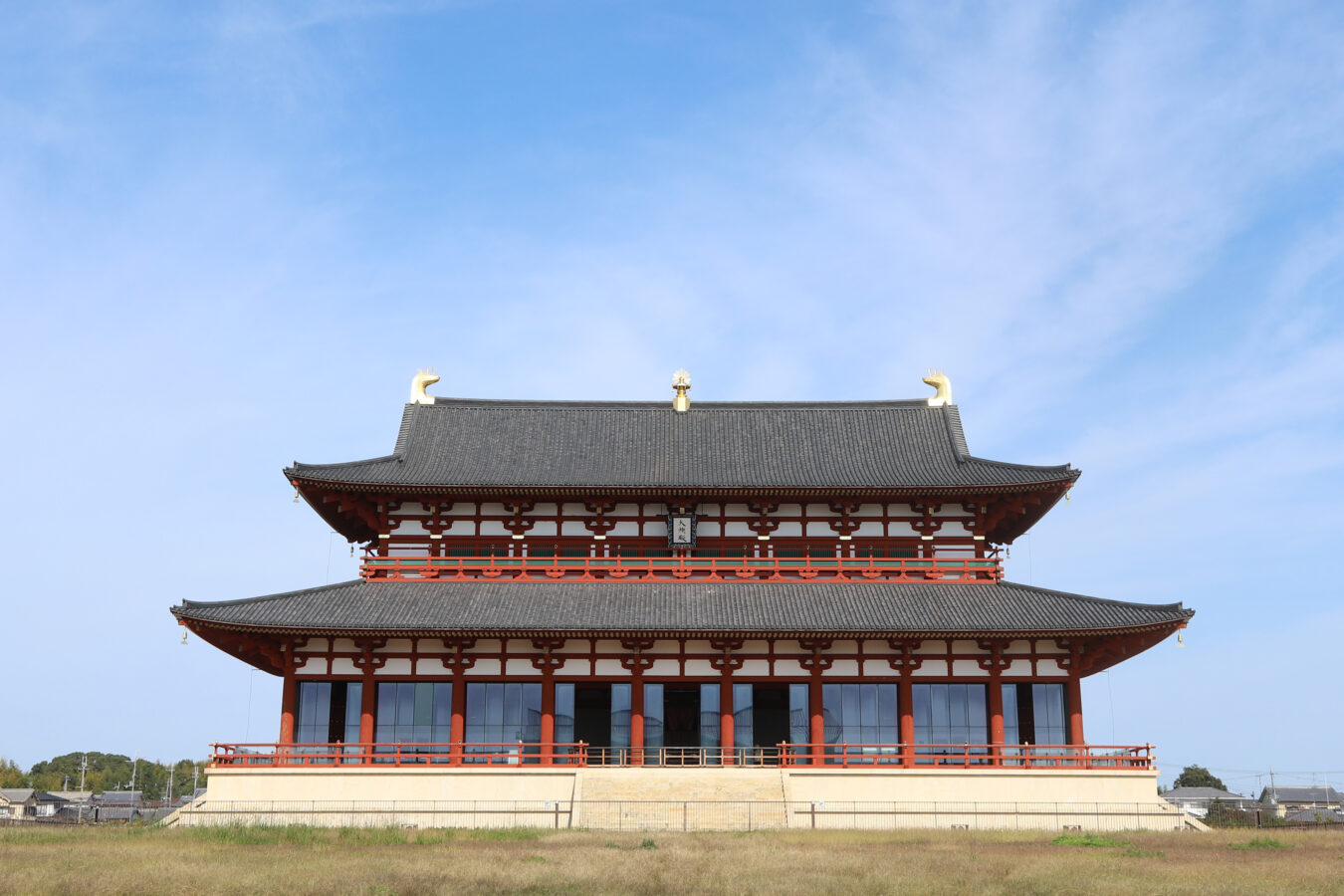
Heijō Palace was the imperial residence and seat of government of the capital Heijō-kyō — today's Nara — for most of the Nara period, from 710 to 794. Following the Chinese models on which the capital was designed, it stood at the north-centre of the city. It consisted of the daidairi, a large walled rectangle holding ceremonial and administrative buildings, including the government ministries, and within it the separately walled Inner Palace, where the emperor lived.
Yamato-Saidaiji Station on the Kintetsu Kyoto Line is about 1.2 km from the point this page is mapped to. Saidai-ji is about 1.5 km off and Toshodai-ji & Yakushi-ji about 2 km. We have not checked what is on view at the site today.
Written by japan-spots.com (2026-09-22) from the sources credited on this page. Distances are straight lines between map positions.
Photos
Photos from Wikimedia Commons, each under its own licence — see credits
- 復元された第一次大極殿 — Tsuyoshi chiba · CC BY-SA 4.0 · source · resized
- 復元された第一次大極殿の内部 — Tsuyoshi chiba · CC BY-SA 4.0 · source · resized
- 大極殿 - panoramio — Roman SUZUKI · CC BY 3.0 · source · resized
- Toin Teien — Wikiwikiyarou · CC BY-SA 4.0 · source · resized
- Heijokyo Suzakumon 05 — KENPEI · CC BY-SA 3.0 · source · resized
- Heijo Palace, Latter Daigoku-den — Saigen Jiro · CC0 · source · resized
- Heijo Palace, Kunaisho-ato-2 — Saigen Jiro · CC0 · source · resized
- Heijo Palace, Hyobusho-ato — Saigen Jiro · CC0 · source · resized
What this place is
Heijō Palace (平城宮, Heijō-kyū) was the imperial residence in the Japanese capital city Heijō-kyō (today's Nara), during most of the Nara period. The palace, which served as the imperial residence and the administrative centre for most of the Nara period from 710 to 794 AD, was located at the north-central location of the city in accordance with the Chinese models used for the design of the capital. The palace consisted of a daidairi (大内裏; also pronounced taidairi), a large rectangular walled enclosure which contained several ceremonial and administrative buildings, including the government ministries. Inside this enclosure was the separately walled residential compound of the emperor or the Inner Palace.
Visitor information checked: 2026-10-07 · Official visitor information
Background text from Wikipedia (CC BY-SA 4.0)
What to expect at this type of place: Castle
Nearby station
Nearby station: Yamato-Saidaiji (Kintetsu Kyoto Line), about 1.2 km from the spot in a straight line.
Worked out on 2026-09-14 from this place’s map position, using HeartRails Express station data and station names from Wikidata. The distance is a straight line, not a walking route, and says nothing about buses, transfers or timetables — plan the trip on Google Maps.
Traveler reviews
No reviews yet — be the first to share how it went.