Usual hours and prices, checked 2026-10-06 against the sources under “What this place is”. They can change for holidays and events — confirm before you go. Official site
Our guide
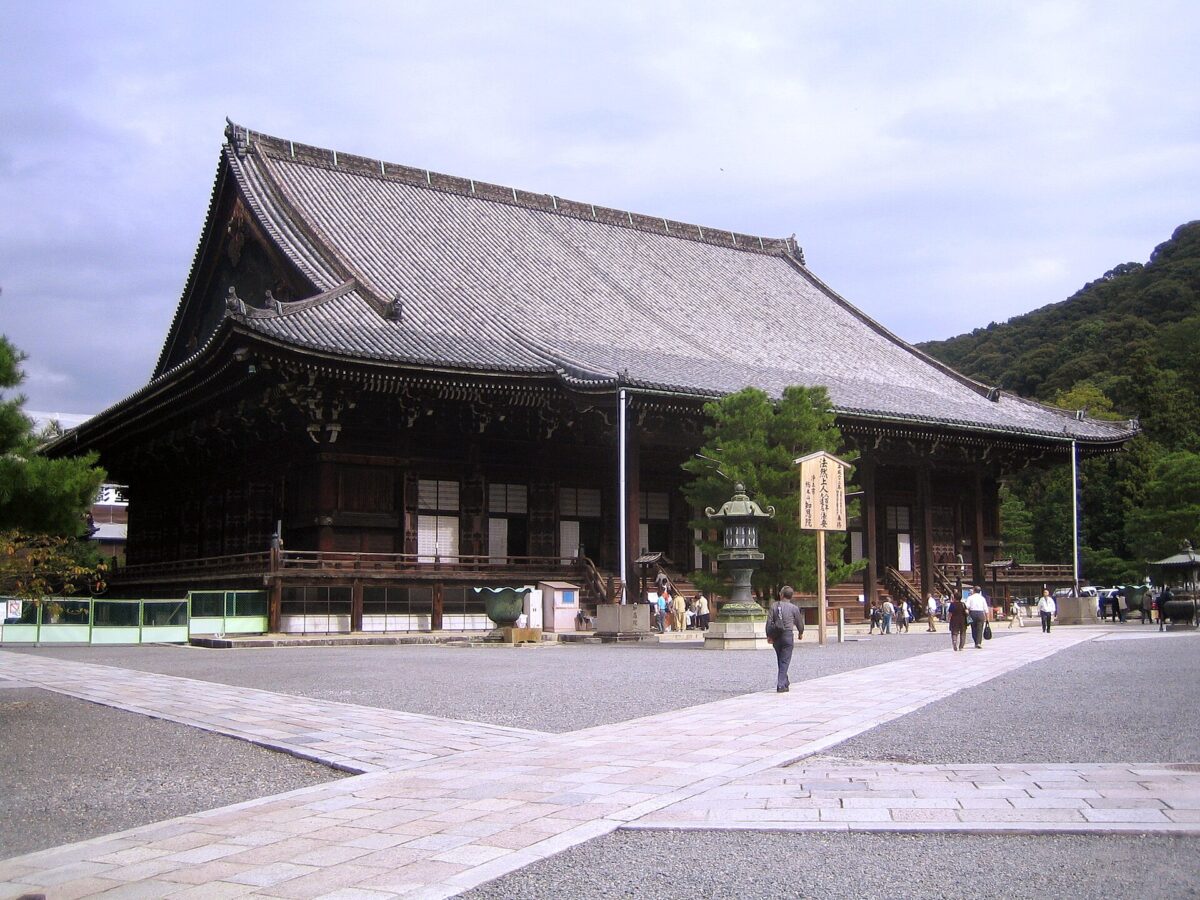
Chion-in in Higashiyama Ward, Kyoto, is the headquarters of Jōdo-shū, the Pure Land sect founded by Hōnen (1133–1212), who taught that beings are reborn in Amida Buddha's Pure Land by reciting the nembutsu, Amida's name. Its vast grounds take in both the place where Hōnen settled to spread his teaching and the place where he died.
Yasaka Shrine and Kōdai-ji are each about 500 m away in a straight line, and Gion District about 800 m. Higashiyama Station on the Tōzai Line is about 550 m off. We have not checked opening hours or fees.
Written by japan-spots.com (2026-09-22) from the sources credited on this page. Distances are straight lines between map positions.
Photos
Photos from Wikimedia Commons, each under its own licence — see credits
- Chion-in (Mieido) — Lombroso · Public domain · source · resized
- Chionin01n4272 — 663highland · CC BY 2.5 · source · resized
- Chion-in kyozou — KENPEI · CC BY-SA 3.0 · source · resized
- Chion-in daishoro2 — KENPEI · CC BY-SA 3.0 · source · resized
- Chion-in daishoro1 — KENPEI · CC BY-SA 3.0 · source · resized
- 170225 Chionin Kyoto Japan12s3 — 663highland · CC BY-SA 4.0 · source · resized
- 170225 Chionin Kyoto Japan10s3 — 663highland · CC BY-SA 4.0 · source · resized
- 170225 Chionin Kyoto Japan09s3 — 663highland · CC BY-SA 4.0 · source · resized
- 170225 Chionin Kyoto Japan07s3 — 663highland · CC BY-SA 4.0 · source · resized
What this place is
Chion-in (知恩院, Monastery of Gratitude) in Higashiyama-ku, Kyoto, Japan is the headquarters of the Jōdo-shū (Pure Land Sect) founded by Hōnen (1133–1212), who proclaimed that sentient beings are reborn in Amida Buddha's Western Paradise (Pure Land) by reciting the nembutsu, Amida Buddha's name. The vast compounds of Chion-in include the site where Hōnen settled to disseminate his teachings and the site where he died.
Visitor information checked: 2026-10-06 · Official visitor information
Background text from Wikipedia (CC BY-SA 4.0)
What to expect at this type of place: Temple
Nearby station
Nearby station: Higashiyama (Tōzai Line), about 550 m from the spot in a straight line.
Worked out on 2026-09-14 from this place’s map position, using HeartRails Express station data and station names from Wikidata. The distance is a straight line, not a walking route, and says nothing about buses, transfers or timetables — plan the trip on Google Maps.
Traveler reviews
No reviews yet — be the first to share how it went.