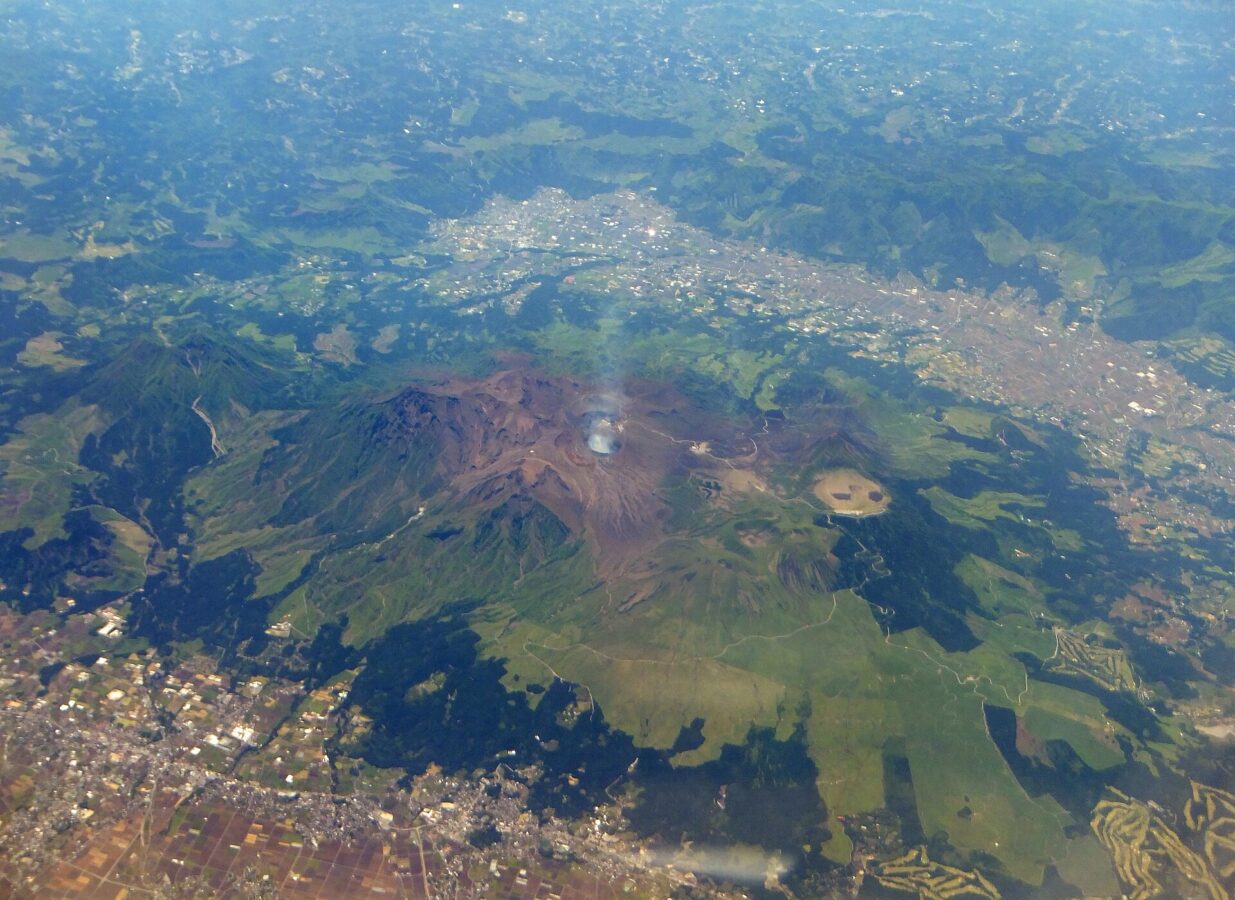
Mt. Aso crater
阿蘇山
High ground with alpine air, big views and trails for every level.
Photos
Photos from Wikimedia Commons — click any image for the photographer and licence.
What this place is
Mount Aso (阿蘇山, Aso-san) or Aso Volcano is the second largest active volcano in Japan after Mount Fuji, and among the largest in the world. Common use relates often only to the somma volcano in the centre of Aso Caldera. It stands in Aso Kujū National Park in Kumamoto Prefecture, on the island of Kyushu. Its tallest peak, Takadake, is 1,592 meters (5,223 ft) above sea level. Mount Aso is in a fairly large caldera (25 kilometers (16 miles) north-south and 18 km (11 mi) east-west) with a circumference of around 120 km (75 mi), although sources vary on the exact distance. It is one of the 100 Famous Japanese Mountains.
Mt. Aso crater (阿蘇山) is one of the standout places to visit in Kumamoto. Give yourself unhurried time for photos, seasonal views, and nearby food stops. IC cards such as Suica, Pasmo, or ICOCA cover most trains and city buses.
Background text from Wikipedia (CC BY-SA)
Why it is worth the trip
- Panoramas that open up above the treeline — on clear days you can trace whole valleys and distant ranges.
- Vegetation that changes with altitude, from cedar forest to alpine flowers within a single climb.
- Ropeways, toll roads or mountain buses that put the scenery within reach of casual visitors, not just hikers.
What you can do here
- Ride the ropeway or mountain bus to the upper station and walk the easy loop trail at the top.
- Photograph the sea of clouds or sunrise — early morning is usually the clearest window.
- Hike a marked course matched to your time and fitness; most trailheads post an estimated round-trip time.
- Combine the visit with a nearby hot spring to finish the day.
Getting there by public transport
- JR limited express to Aso + bus/shuttle to ropeway (check alerts).
- Nearest station/stop: Aso / Kusasenri.
Good to know before you go
- Temperature drops roughly 0.6°C per 100 m of elevation — bring a windproof layer even in summer.
- Mountain transport stops early and pauses in winter or bad weather; check the last downhill service.
- Bring cash: summit shops and mountain huts often have no card readers or signal.
Traveler reviews
No reviews yet — be the first to share how it went.