No opening hours or admission are shown: the sources we checked on 2026-09-13 were used for the route only. Check the official site
AD 🛏️ Hotels nearby on Agoda ↗ About this link
Our guide
Lake Tōya is a volcanic caldera lake in Shikotsu-Tōya National Park, nearly round — about 10 km across from east to west and 9 km from north to south — with the volcano Mount Usu on its southern rim. It is part of the Tōya Caldera and Usu Volcano Global Geopark. It is said to be the northernmost lake in Japan that never freezes (nearby Lake Shikotsu makes the same claim), and the second clearest in the country. Nakajima, an island in the middle of the lake, holds the Tōya Lake Forest Museum.
The nearest station is JR Tōya, from where a Dōnan bus or a taxi runs to Tōyako Onsen. By limited express on the Muroran Main Line it is about an hour and a half from New Chitose Airport (changing at Minami-Chitose) or from Hakodate, and Dōnan buses also run from Sapporo.
Written by japan-spots.com (2026-09-22) from the sources credited on this page. Distances are straight lines between map positions.
Photos
Photos from Wikimedia Commons, each under its own licence — see credits
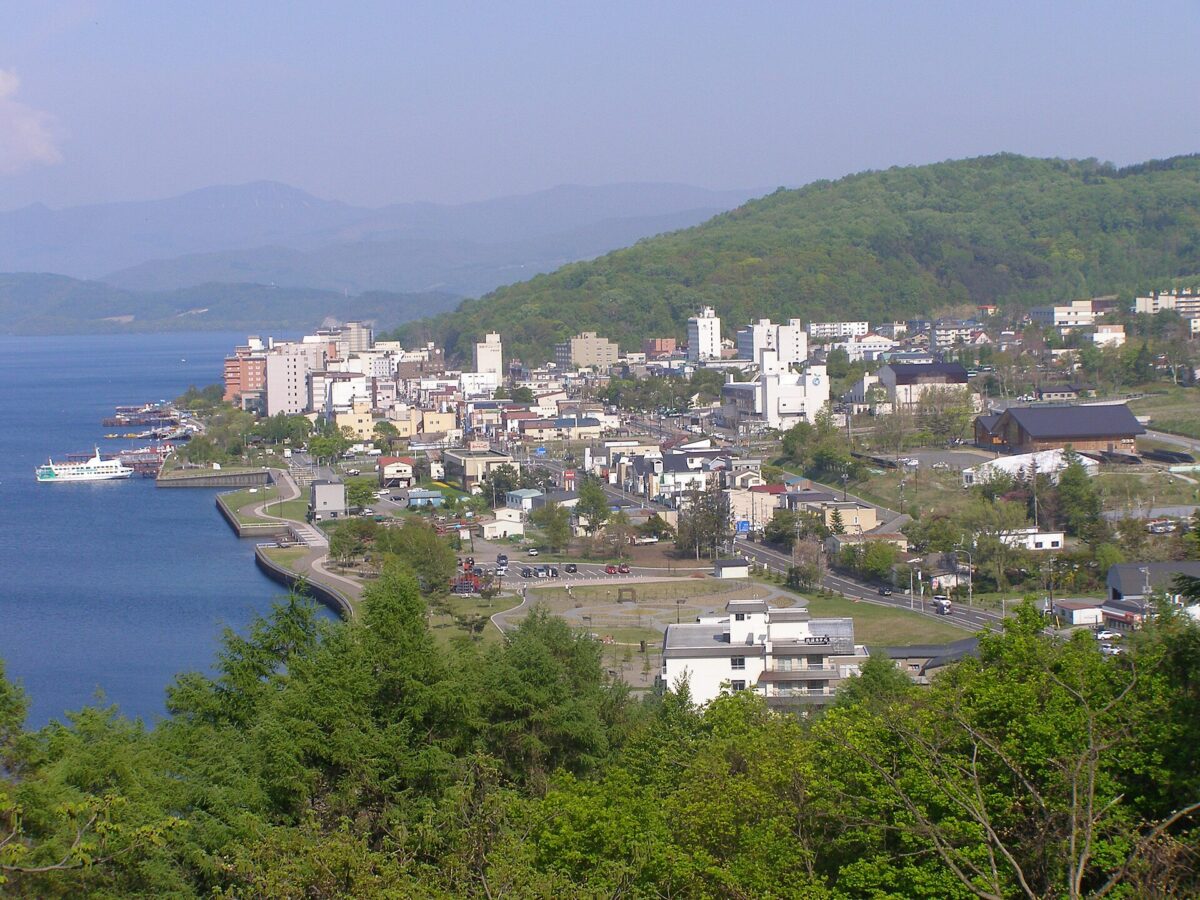
- View of Tōyako-onsen town — Wakimasa · Public domain · source · resized
- 130922 Lake Toya Toyako Hokkaido Japan03s3 — 663highland · CC BY 2.5 · source · resized
- 130922 Toyako Onsen Toyako Hokkaido Japan01s3 — 663highland · CC BY 2.5 · source · resized
- Hakubutsukanmae.jetty — ブルーノ・プラス · CC BY-SA 4.0 · source · resized
- Hokkaido-Toya Lake-xl — 洞爺湖町 · CC BY 4.0 · source · resized
- Lake-toya、洞爺湖 浮見堂公園 — 我路・幌内画像倉庫 · CC BY-SA 3.0 · source · resized
- Lake Toya 20140808 — Suicasmo · CC BY-SA 4.0 · source · resized
- Mt Tonoshikenupuri — Highten31 · CC BY-SA 3.0 · source · resized
What this place is
Lake Tōya (洞爺湖, Tōya-ko) is a volcanic caldera lake in Shikotsu-Toya National Park, Abuta District, Hokkaido, Japan. It is part of "Toya Caldera and Usu Volcano Global Geopark" which joins in Global Geoparks Network. The stratovolcano of Mount Usu lies on the southern rim of the caldera. The lake is nearly circular, being 10 km (6.2 mi) in diameter from the eastwest and 9 km (5.6 mi) from the northsouth. The town of Tōyako comprises most of the area surrounding the lake and the town of Sōbetsu is located on the eastern side. Lake Tōya is said to be the northernmost lake in Japan that never ices (with competing claim by nearby Lake Shikotsu), and the second most transparent lake in Japan. Nakajima Island is a recursive island in the middle of the lake which houses the Tōya Lake Forest Museum.
Visitor information checked: 2026-09-13 · Tōyako Onsen Tourism Association: access
Background text from Wikipedia (CC BY-SA 4.0)
What to expect at this type of place: Lakes & falls
Getting there by public transport
- The nearest station is JR Tōya Station; from there take a Dōnan bus or a taxi to Tōyako Onsen.
- By limited express on the Muroran Main Line: from New Chitose Airport (changing at Minami-Chitose) about 1 hour 30 minutes, from Higashi-Muroran about 30 minutes, from Hakodate about 1 hour 30 minutes.
- Dōnan buses also run from Sapporo.
Route checked: 2026-09-13 · Tōyako Onsen Tourism Association: access · Timetables change — check the operator before you travel.
Where to stay nearby
Hotels near Lake Toya on Agoda
AD Affiliate link: if you book through it, we may earn a commission from Agoda, at no extra cost to you. Hotels, prices and availability are Agoda’s, for the whole town around this spot.
Traveler reviews
No reviews yet — be the first to share how it went.