Usual hours and prices, checked 2026-10-04 against the sources under “What this place is”. They can change for holidays and events — confirm before you go. Official site
AD 🛏️ Hotels nearby on Agoda ↗ About this link
Our guide
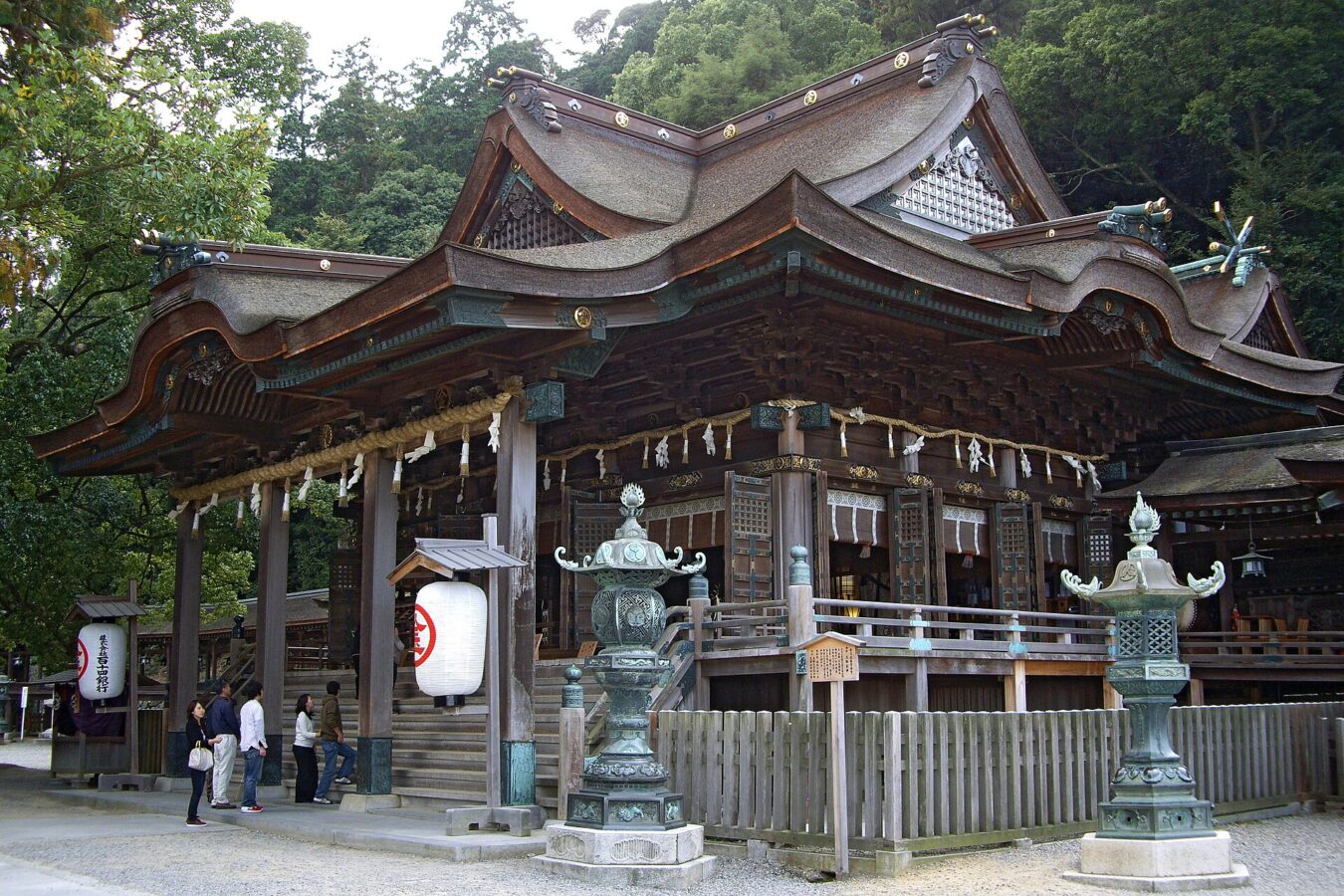
Kotohira-gū, nicknamed Konpira-san, is a shrine famous above all for its stairs: 785 steps from the town up to the main shrine, 251 m above sea level, and another 583 on to the inner shrine at 421 m — 1,368 in all. Decide before you start how far you are going.
The shrine is held to protect sailors and fishermen, and because it stands on the holy Mount Zōzu its faith also carries a thread of mountain worship. Its principal kami is Ōmononushi, it is also dedicated to Emperor Sutoku, and it heads a network of about 600 Kotohira shrines across Japan. Before the Meiji separation of Shinto and Buddhism it was called Konpira Daigongen.
Kotoden-Kotohira Station is about 1.2 km away in a straight line, and Konpira Grand Theatre about 0.8 km.
Written by japan-spots.com (2026-09-22) from the sources credited on this page. Distances are straight lines between map positions.
Photos
Photos from Wikimedia Commons, each under its own licence — see credits
- Kotohira-gu01s — Toto-tarou · CC BY-SA 3.0 · source · resized
- Konpira 09 — Dokudami · CC BY-SA 4.0 · source · resized
- Konpira 05 — Dokudami · CC BY-SA 4.0 · source · resized
- Konpira 03 — Dokudami · CC BY-SA 4.0 · source · resized
- Konpira 01 — Dokudami · CC BY-SA 4.0 · source · resized
- Konpia 04 — Dokudami · CC BY-SA 4.0 · source · resized
- Homotsukan Kotohira-gu01n4592 — 663highland · CC BY 2.5 · source · resized
- Konpira 07 — Dokudami · CC BY-SA 4.0 · source · resized
What this place is
Kotohira-gū (金刀比羅宮) (also known by the nickname Konpira-san (こんぴらさん) or Konpira Shrine in English) is a Shinto shrine in the town of Kotohira in Kagawa Prefecture, Japan. Prior to the separation of Shinto and Buddhism in the Meiji era, its name was Konpira Daigongen (金毘羅大権現). The shrine is believed to be a guardian of sailors and fishermen, though its faith also has aspects of mountain worship due to its location on the holy Mount Zōzu. The shrine's principal kami is Ōmononushi, and the shrine is also dedicated to Emperor Sutoku. It is the head shrine of a network of approximately 600 Kotohira shrines throughout the country. The shrine is famous for the long staircase leading up to the shrine, with 785 steps from the town below to the main shrine which is 251 meters above sea level and another 583 steps to the inner shrine which is 421 meters above sea level for a total of 1,368 steps.
Visitor information checked: 2026-10-04 · Kotohiragu: gate and worship-area hours
Background text from Wikipedia (CC BY-SA 4.0)
What to expect at this type of place: Shrine
Nearby station
Nearby station: Kotoden-Kotohira (Kotohira Line), about 1.2 km from the spot in a straight line.
Worked out on 2026-09-14 from this place’s map position, using HeartRails Express station data and station names from Wikidata. The distance is a straight line, not a walking route, and says nothing about buses, transfers or timetables — plan the trip on Google Maps.
Where to stay nearby
Hotels near Konpira Shrine (Kotohira) on Agoda
AD Affiliate link: if you book through it, we may earn a commission from Agoda, at no extra cost to you. Hotels, prices and availability are Agoda’s, for the whole town around this spot.
Traveler reviews
No reviews yet — be the first to share how it went.