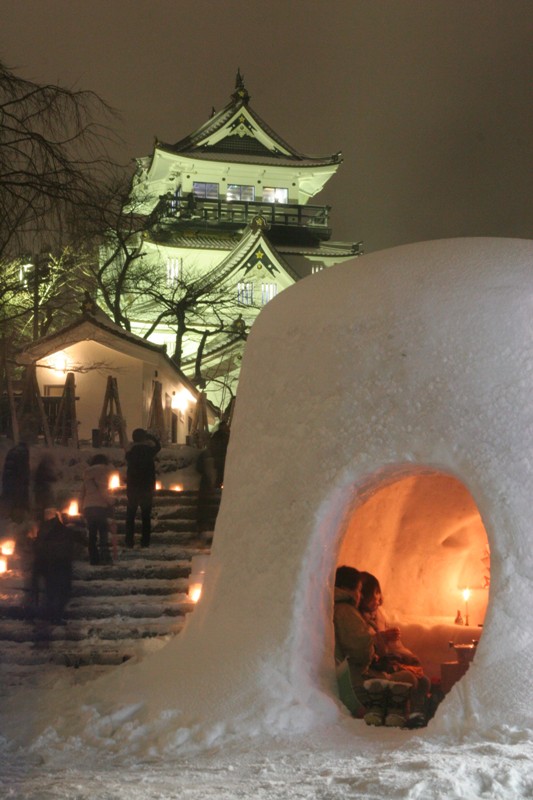
Kamakura Snow Huts (seasonal)
かまくら
Coastline with sea air, sunset angles and a slower island tempo.
Photos
Photos from Wikimedia Commons — click any image for the photographer and licence.
What this place is
Kamakura (かまくら or カマクラ) is a type of traditional snow dome or quinzhee in snowy regions of Japan.Kamakura may also refer to the various ceremonial winter celebrations involving those snow domes, or to the Shinto deity Kamakura Daimyojin (鎌倉大明神), who is revered during some of those celebrations.During some kamakura festivals, altars are set up inside domes of snow and Shinto rites are performed.The ceremonies in some locales are reputedly adaptations of a traditional ceremony once held in the Kyoto Imperial Palace.It appears that the practice of worshipping Suijin, a Shinto god of water, during the winter came to northeastern Japan during the early Kamakura period when the Nikaidō clan became local landowners.This ceremony may have morphed into various winter fire festivals during which villagers pray for good harvests.
Kamakura Snow Huts (seasonal) (かまくら) is one of the standout places to visit in Akita. Give yourself unhurried time for photos, seasonal views, and nearby food stops. IC cards such as Suica, Pasmo, or ICOCA cover most trains and city buses.
Background text from Wikipedia (CC BY-SA)
Why it is worth the trip
- Rock formations and cliffs shaped by wind and waves, best seen when the light rakes across them.
- Long sea horizons — this stretch is known for its sunrise or sunset depending on which way the coast faces.
- Small fishing harbours nearby where the day's catch goes straight into local restaurants.
What you can do here
- Walk the shoreline path or headland trail to the main viewpoint.
- Stay for sunset; the 30 minutes after the sun drops are usually the best colour.
- Eat seafood at a harbour-side shokudo — donburi rice bowls and grilled shellfish are the standards.
- In summer, swim or try a boat trip, sea kayak or glass-bottom cruise where operated.
Getting there by public transport
- JR to Yokote; festival venues are city-bus/walk accessible in February.
- Nearest station/stop: Yokote.
Good to know before you go
- Check tide times if you plan to walk out onto rocks or sand bars.
- Coastal wind is strong year-round; a windbreaker beats an umbrella.
- Buses along the coast can run only a few times a day — note the return time before you set out.
Traveler reviews
No reviews yet — be the first to share how it went.