Usual hours and prices, checked 2026-10-07 against the sources under “What this place is”. They can change for holidays and events — confirm before you go. Official site
Our guide
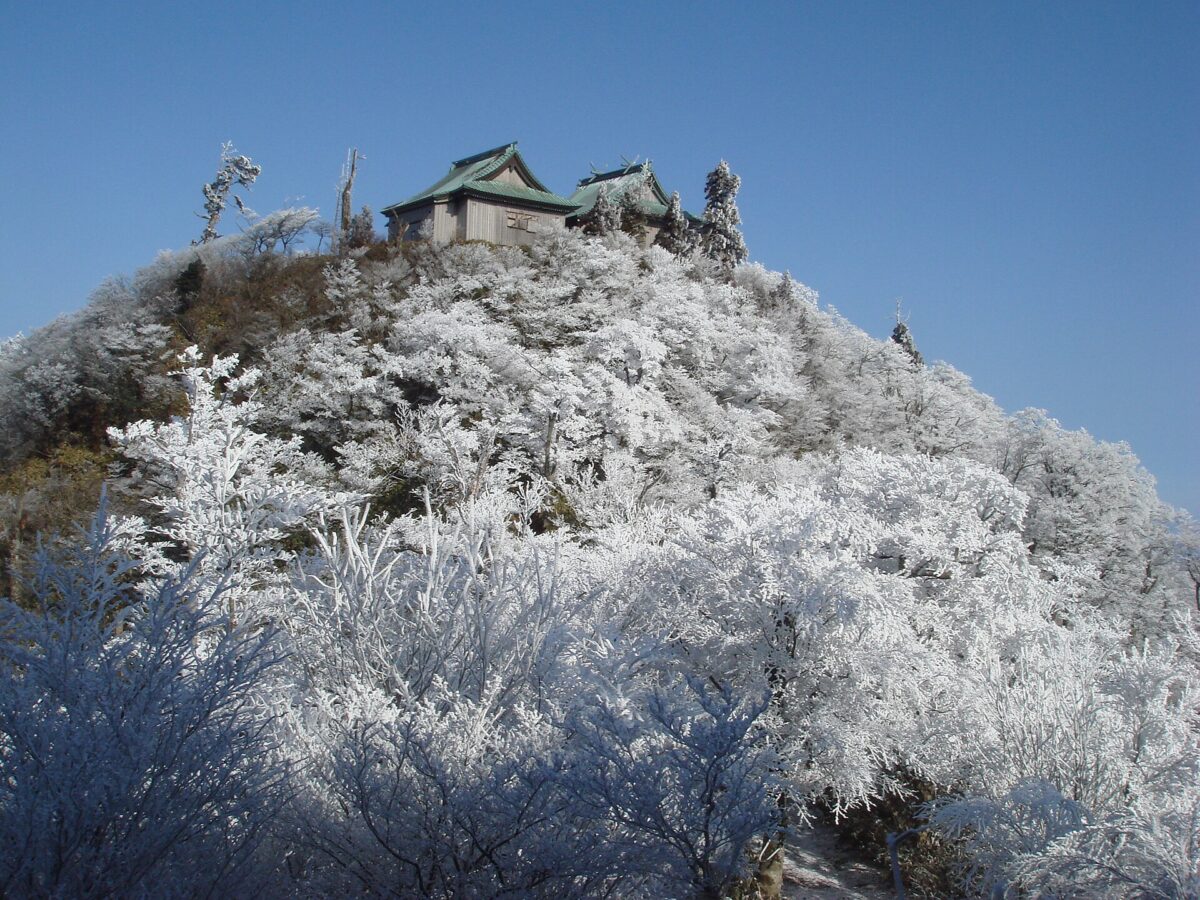
Hikosan Jingū is a shrine in the town of Soeda, Fukuoka, on the Fukuoka side of Mount Hiko, which stands on the border with Ōita. The mountain has been revered as sacred since ancient times and was a centre of Shugendō training. The upper shrine, the Jōgū, stands at the innermost part of the grounds on top of Naka-dake, the central of Hiko-san's three peaks; the sanctuary is said to date from 546. The Hōheiden, a large hall built in 1616, and the Kane-no-Torii, a bronze torii of 1637, are both Important Cultural Properties.
This is a mountain shrine. We have not checked the paths or a public-transport route, so look for local information before you go.
Written by japan-spots.com (2026-09-22) from the sources credited on this page. Distances are straight lines between map positions.
Photos
Photos from Wikimedia Commons, each under its own licence — see credits
- 英彦山神宮上津宮 — 宗教法人英彦山神宮 · CC BY-SA 4.0 · source · resized
- 招魂社例祭 — 宗教法人英彦山神宮 · CC BY-SA 4.0 · source · resized
- 招魂社 — 宗教法人英彦山神宮 · CC BY-SA 4.0 · source · resized
- 御田祭の風景 — 宗教法人英彦山神宮 · CC BY-SA 4.0 · source · resized
- 御汐井採神事の風景 — 宗教法人英彦山神宮 · CC BY-SA 4.0 · source · resized
- 学問社 — 宗教法人英彦山神宮 · CC BY-SA 4.0 · source · resized
- 天水分神 — 宗教法人英彦山神宮 · CC BY-SA 4.0 · source · resized
- 例大祭 — 宗教法人英彦山神宮 · CC BY-SA 4.0 · source · resized
- 上津神社 — 宗教法人英彦山神宮 · CC BY-SA 4.0 · source · resized
- Nakashima Jinja — STA3816 · CC BY-SA 3.0 · source · resized
What this place is
Hikosan Jingū (英彦山神宮) is a Shinto shrine located in Soeda, Fukuoka prefecture, Japan. Located on the boundary between Fukuoka and Oita Prefectures, Hiko-san has been venerated from ancient times as a sacred mountain. It was also a center of training for the Shugendō sect of Buddhism. The shrine is located on the Fukuoka Prefecture side of the mountain. The Jō-gu is located in the innermost part of the shrine grounds on the top of Naka-dake, the center peak of the three Hiko-san peaks. The sanctuary is said to have been built in 546. The Hōhei-den, a large lecture hall built in 1616, and the Kane-no-Torii, a bronze Shinto gateway built in 1637, have both been designated Important Cultural Properties by the Japanese government.
Visitor information checked: 2026-10-07 · Official visitor information
Background text from Wikipedia (CC BY-SA 4.0)
What to expect at this type of place: Shrine
Getting there
We do not have step-by-step transit directions for this spot yet. Open the location on Google Maps for routes from where you are staying.
Traveler reviews
No reviews yet — be the first to share how it went.