Opening hours and admission for this place have not been checked yet, so none are shown. Check the official site
Our guide
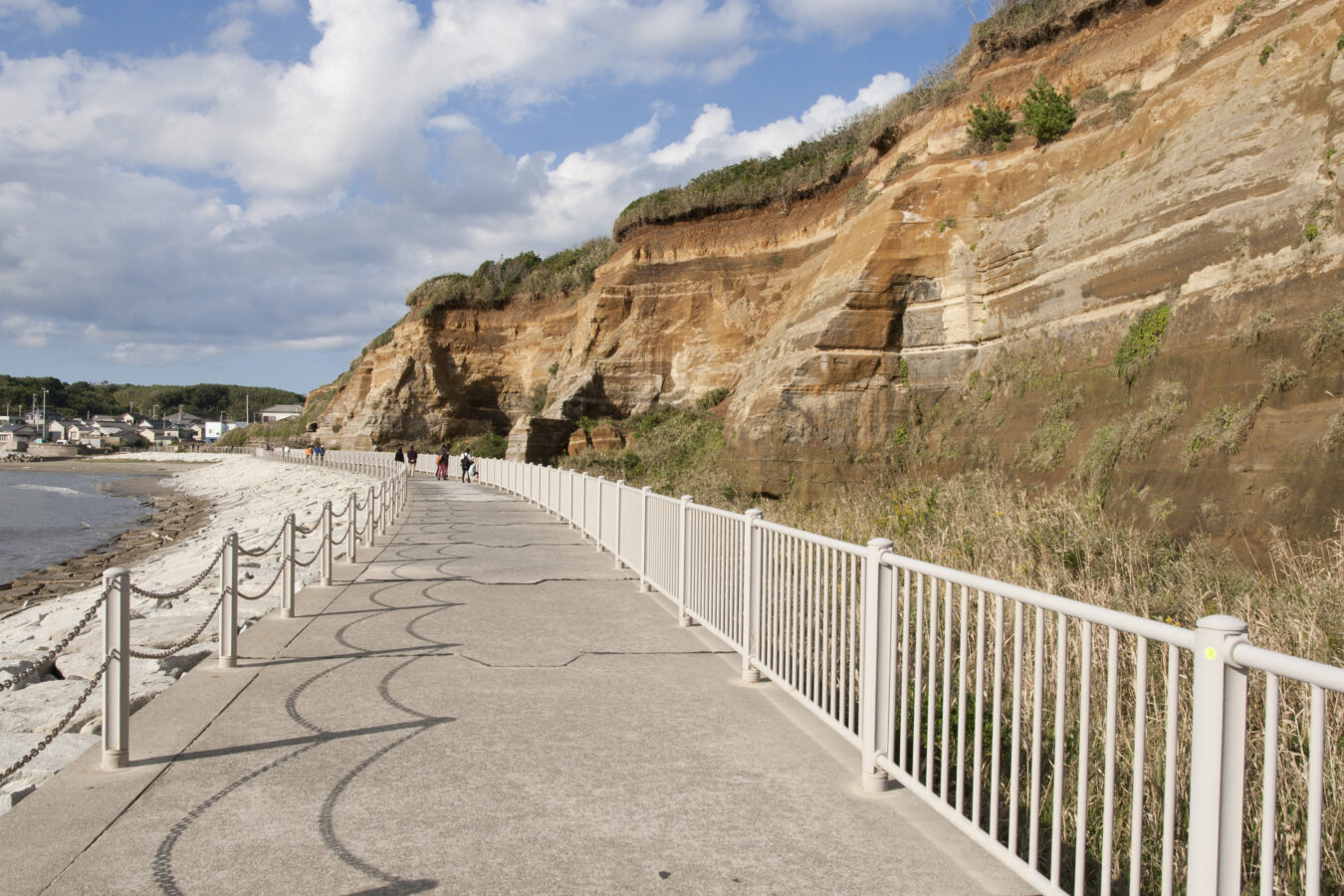
Byōbugaura is a stretch of the north-east coast of Chiba running from Cape Inubō in Chōshi to Cape Gyōbumi in Asahi, linking the Pacific coast at Chōshi with Kujūkuri Beach. Its name joins byōbu, a folding screen, and ura, an inlet. Because it resembles the White Cliffs of Dover, it is sometimes called “the Dover of the East”, and it has a long history of erosion by the sea.
We have not checked a public-transport route or where the cliffs are best seen, so look for local information before you go.
Written by japan-spots.com (2026-09-22) from the sources credited on this page. Distances are straight lines between map positions.
Photos
Photos from Wikimedia Commons, each under its own licence — see credits
- Byobugaura 11 — Σ64 · CC BY 3.0 · source · resized
- 屏風ヶ浦 - panoramio (5) — くろふね · CC BY 3.0 · source · resized
- Byoubugaura — ja:user:marchaska · Public domain · source · resized
- Byobugaura 17 — Σ64 · CC BY 3.0 · source · resized
- Byobugaura 13 — Σ64 · CC BY 3.0 · source · resized
- Byobugaura 05 — Σ64 · CC BY 3.0 · source · resized
- 屏風ヶ浦 - panoramio — くろふね · CC BY 3.0 · source · resized
- 屏風ヶ浦 - panoramio (1) — くろふね · CC BY 3.0 · source · resized
- 屏風ヶ浦 - panoramio (3) — くろふね · CC BY 3.0 · source · resized
What this place is
Byōbugaura (屏風ヶ浦, Byōbugaura) is an inlet on the northeast coast of Chiba Prefecture that ranges from Cape Inubō in Chōshi to Cape Gyōbumi in Asahi. Byōbugaura is an important part of the coastal area in Chiba Prefecture, as it connects the northern point of the Pacific Ocean coast at Chōshi to Kujūkuri Beach, which covers a large portion of the western side of the prefecture. The name of the inlet is formed from the word "byōbu", the Japanese-style folding screen, and "ura", meaning an inlet. Byōbugaura resembles the White Cliffs of Dover on the English Channel. For this reason the inlet is sometimes called Tōyō no Dōbā (東洋のドーバー), or "Dover of the East". Byōbugaura is known for its long history of marine erosion.
Background text from Wikipedia (CC BY-SA 4.0)
What to expect at this type of place: Landmark
Getting there
We do not have step-by-step transit directions for this spot yet. Open the location on Google Maps for routes from where you are staying.
Traveler reviews
No reviews yet — be the first to share how it went.