Usual hours and prices, checked 2026-10-05 against the sources under “What this place is”. They can change for holidays and events — confirm before you go. Official site
Our guide
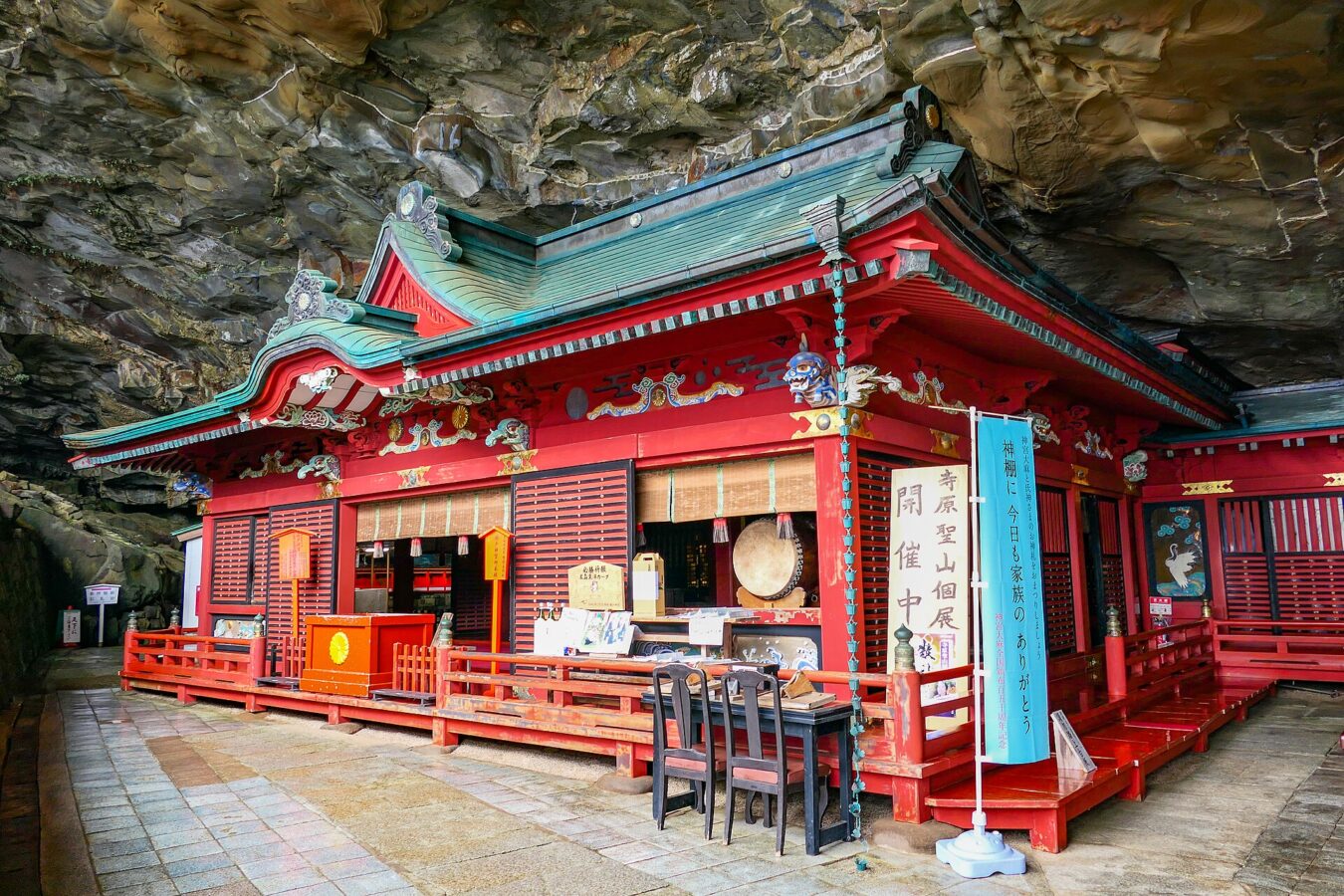
Udo Jingū, in Nichinan, south of Aoshima, is in myth the birthplace of Ugayafukiaezu, father of Emperor Jimmu. The shrine's legend says this is where the sea goddess Toyotamahime, his mother, built a birthing hut thatched with cormorant feathers. Several other gods are venerated here too, among them Amaterasu and Emperor Jimmu. The myth ends in a sad parting of Ugayafukiaezu's parents, yet the shrine is popular with young couples who come to pray for an easy birth and a happy marriage.
We have not checked a public-transport route or opening arrangements, so plan the journey on the map and look for local information before you go.
Written by japan-spots.com (2026-09-22) from the sources credited on this page. Distances are straight lines between map positions.
Photos
Photos from Wikimedia Commons, each under its own licence — see credits
- Udo-jingu Main-shrine — MaedaAkihiko · CC BY-SA 4.0 · source · resized
- Udo-jingu Auxiliary Kokonohashira-jinja 001 — Naokijp · CC BY-SA 4.0 · source · resized
- Udo-jingu Auxiliary Inari-jinja Torii 001 — Naokijp · CC BY-SA 4.0 · source · resized
- Udo-jingu Auxiliary Inari-jinja 001 — Naokijp · CC BY-SA 4.0 · source · resized
- Udo-jingu Auxiliary Ebisu-jinja 001 — Naokijp · CC BY-SA 4.0 · source · resized
- Toriis of Namikiri Shrine in Udo Shrine 2 — そらみみ · CC BY-SA 4.0 · source · resized
- Tamabashi Bridge in Udo Shrine 2 — そらみみ · CC BY-SA 4.0 · source · resized
- Sumiyoshi Shrine in Udo Shrine — そらみみ · CC BY-SA 4.0 · source · resized
- Shimmon Gate of Udo Shrine — そらみみ · CC BY-SA 4.0 · source · resized
- Sando of Udo Shrine 3 — そらみみ · CC BY-SA 4.0 · source · resized
What this place is
Udo-jingū (鵜戸神宮) is a Shinto shrine in Nichinan, Miyazaki prefecture, Japan, south of Aoshima. It is the mythical birthplace of Emperor Jimmu's father Ugayafukiaezu. According to shrine legends, it is the place where the sea goddess Toyotamahime, the mother of said Ugayafukiaezu, built a birth-hut from the feathers of a cormorant. Other gods venerated here are Yamasachihiko (alias Hohodemi alias Hoori, Jinmu's grandfather), Amaterasu, Amenooshihomimi, Ninigi-no-Mikoto, and Emperor Jimmu. While the original myth includes a tragic divorce of Ugayafukiaezu's parents, the shrine is popular with young couples hoping for easy childbirth and a happy marriage.
Visitor information checked: 2026-10-05 · 鵜戸神宮(公式) – 宮崎県日南海岸にある、運玉投げやシャンシャン馬で有名な神社 · 海岸参道通行止めのお知らせ – 鵜戸神宮(公式)
Background text from Wikipedia (CC BY-SA 4.0)
What to expect at this type of place: Shrine
Getting there
We do not have step-by-step transit directions for this spot yet. Open the location on Google Maps for routes from where you are staying.
Traveler reviews
No reviews yet — be the first to share how it went.