Usual hours and prices, checked 2026-10-07 against the sources under “What this place is”. They can change for holidays and events — confirm before you go. Official site
Our guide
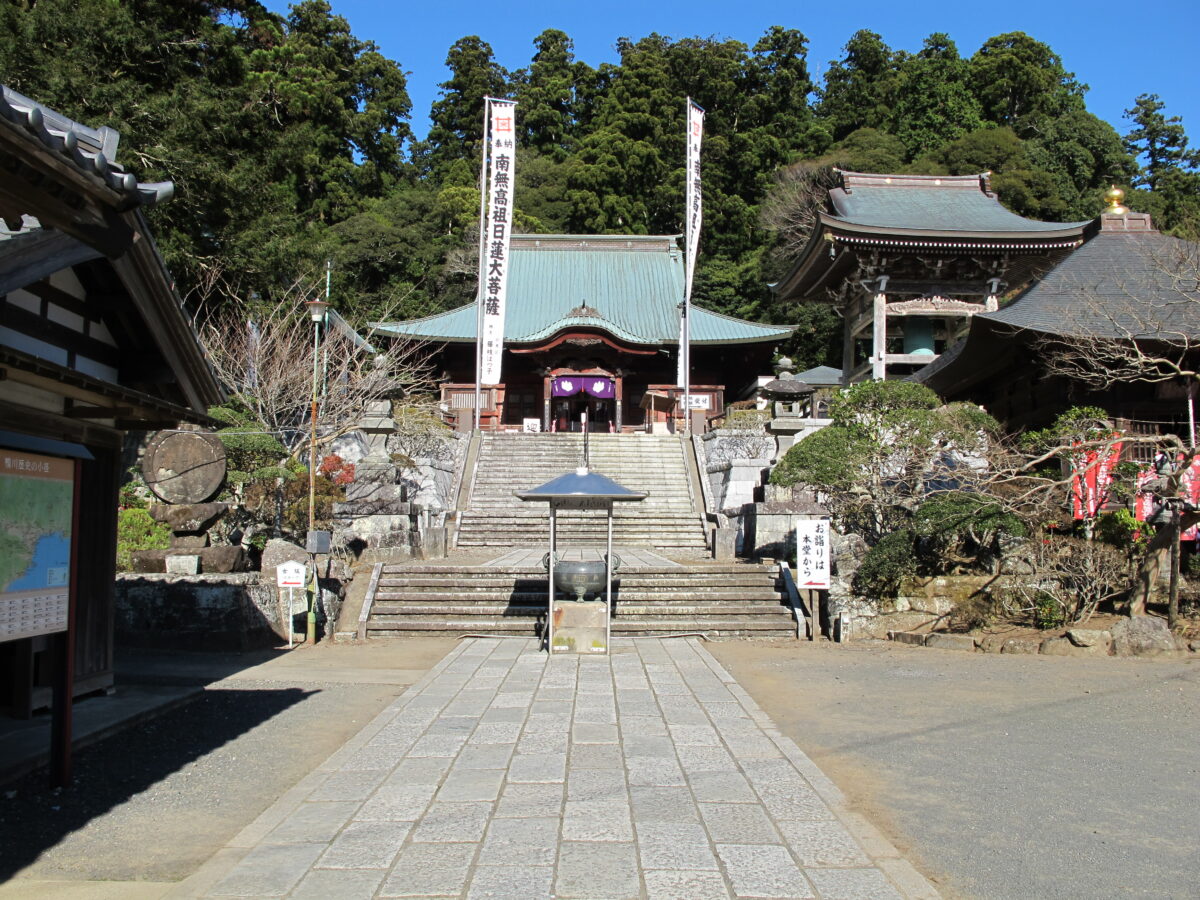
Seichō-ji, also called Kiyozumi-dera, is a Nichiren temple in the city of Kamogawa, Chiba. With Kuon-ji in Yamanashi, Ikegami Honmon-ji in southern Tokyo and Tanjō-ji, also in Kamogawa, it is one of the Four Sacred Places of Nichiren Shū. The priest Nichiren was educated here and was at one time chosen as a successor to its priesthood, before he began the ministry that became Nichiren Buddhism. The temple belonged to other schools, including Tendai and Shingon, before it became a Nichiren temple.
We have not checked a public-transport route, so plan the journey on the map and look for local information before you go.
Written by japan-spots.com (2026-09-22) from the sources credited on this page. Distances are straight lines between map positions.
Photos
Photos from Wikimedia Commons, each under its own licence — see credits
- Seityouji — Masanori88 at Japanese Wikipedia · CC BY-SA 3.0 · source · resized
- Seichoji kokuzo — Sijoking · CC BY-SA 4.0 · source · resized
- Kamogawa Seicho-ji 03 — Tak1701d · CC BY-SA 3.0 · source · resized
- Kamogawa Seicho-ji 02 — Tak1701d · CC BY-SA 3.0 · source · resized
- Kamogawa Seicho-ji 04 — Tak1701d · CC BY-SA 3.0 · source · resized
- Kamogawa Seicho-ji 05 — Tak1701d · CC BY-SA 3.0 · source · resized
- Kiyosumiyama — Xser21 · CC BY-SA 4.0 · source · resized
What this place is
Seichō-ji (清澄寺), also known as Kiyozumi-dera (清水寺), is a Nichiren Buddhist temple located in the city of Kamogawa in Chiba Prefecture, Japan. Along with Kuon-ji in Yamanashi Prefecture, Ikegami Honmon-ji in the south of Tokyo, and Tanjō-ji also in Kamogawa City, Seichō-ji is one of the "Four Sacred Places of Nichiren Shū." The Buddhist priest Nichiren was once educated at the temple, and was chosen at one time to be a successor to its priesthood before he began his own ministry which later became Nichiren Buddhism. At the time, the temple was dedicated to the Pure Land sect, prior to being a Tendai temple, then later changed into Shingon, and now designated a Nichiren Shu temple.
Visitor information checked: 2026-10-07 · Official visitor information
Background text adapted from Wikipedia (CC BY-SA 4.0)
What to expect at this type of place: Temple
Getting there
We do not have step-by-step transit directions for this spot yet. Open the location on Google Maps for routes from where you are staying.
Traveler reviews
No reviews yet — be the first to share how it went.