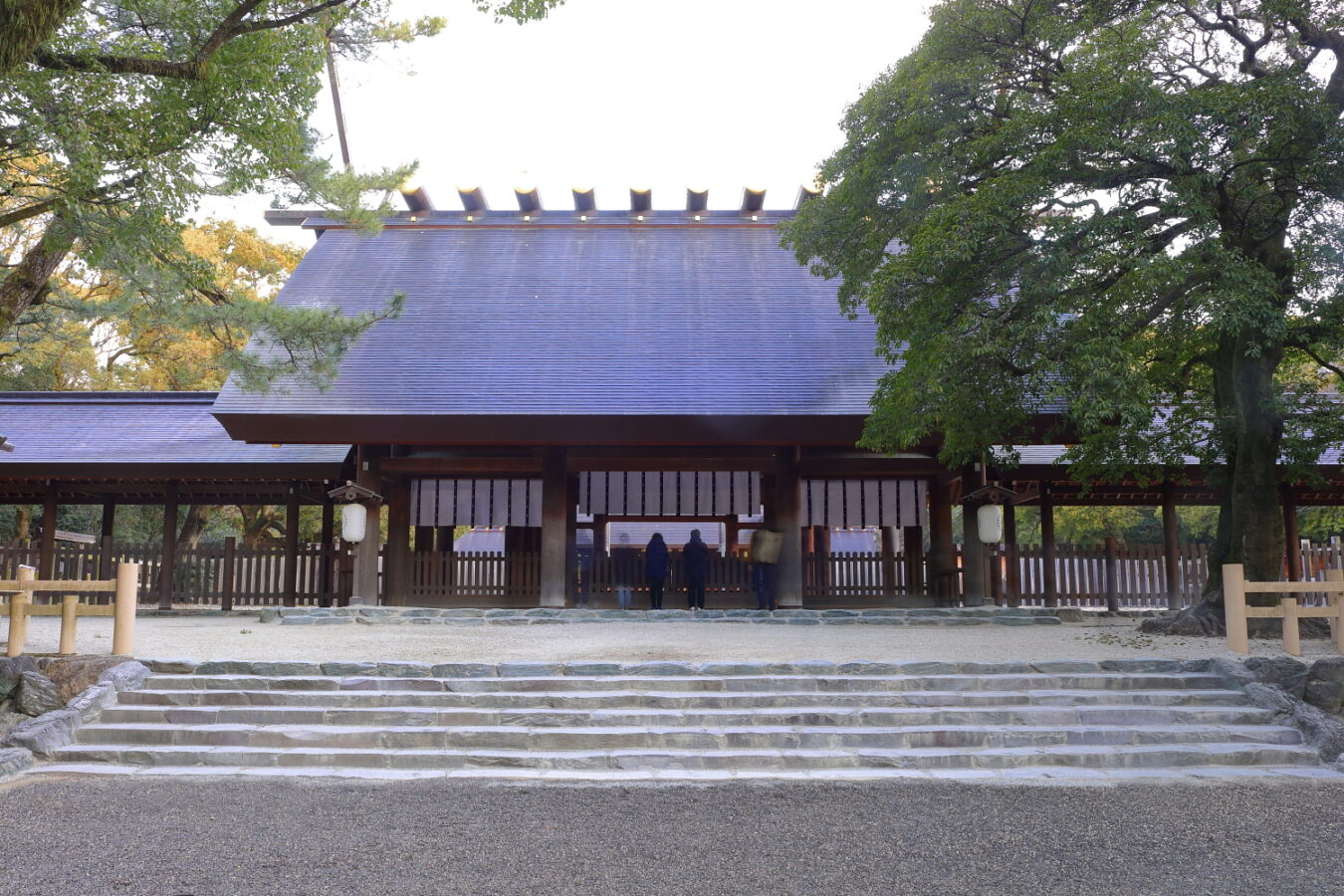
Atsuta Jingu
熱田神宮
A Shinto shrine where you can watch everyday Japanese ritual up close.
Photos
Photos from Wikimedia Commons — click any image for the photographer and licence.
What this place is
Atsuta Shrine (熱田神宮, Atsuta-jingū) is a Shinto shrine, home to the sacred sword Kusanagi no Tsurugi, one of the three Imperial Regalia of Japan—traditionally believed to have been established during the reign of Emperor Keikō (reigned 71–130 CE). It is located in Atsuta-ku, Nagoya, Aichi Prefecture in Japan. The shrine is familiarly known as Atsuta-Sama (Venerable Atsuta) or simply as Miya (the Shrine). Since ancient times, it has been especially revered, ranking with the Ise Shrine. The 200,000-square-metre (2,200,000 sq ft) shrine complex draws over 9 million visitors annually.
Atsuta Jingu (熱田神宮) is one of the standout places to visit in Aichi. Give yourself unhurried time for photos, seasonal views, and nearby food stops. IC cards such as Suica, Pasmo, or ICOCA cover most trains and city buses.
Background text from Wikipedia (CC BY-SA)
Why it is worth the trip
- Torii gates marking the boundary between the everyday world and the sacred grounds beyond.
- A main hall in classic Shinto carpentry, often surrounded by centuries-old trees kept as sacred forest.
- Seasonal rites, wedding processions and festival floats that make the place feel lived-in rather than museum-like.
What you can do here
- Purify your hands and mouth at the temizuya, then offer a coin, bow twice, clap twice, bow once.
- Draw an omikuji fortune slip and tie it on the rack if the prediction is unlucky.
- Collect a goshuin — a hand-brushed seal and calligraphy — in a dedicated stamp book.
- Buy an omamori charm chosen for travel safety, study, love or health.
Getting there by public transport
- Meitetsu/JR to Jingu-mae or Atsuta; walk grounds.
- Nearest station/stop: Jingu-mae / Atsuta.
Good to know before you go
- Walk to the side of the central path; the middle is traditionally left for the deity.
- Photography is usually fine outdoors but often prohibited inside the main hall.
- Grounds are typically open from dawn to dusk even when the office closes at 16:30–17:00.
Traveler reviews
No reviews yet — be the first to share how it went.