Usual hours and prices, checked 2026-09-15 against the sources under “What this place is”. They can change for holidays and events — confirm before you go. Official site
AD 🛏️ Hotels nearby on Agoda ↗ About this link
Our guide
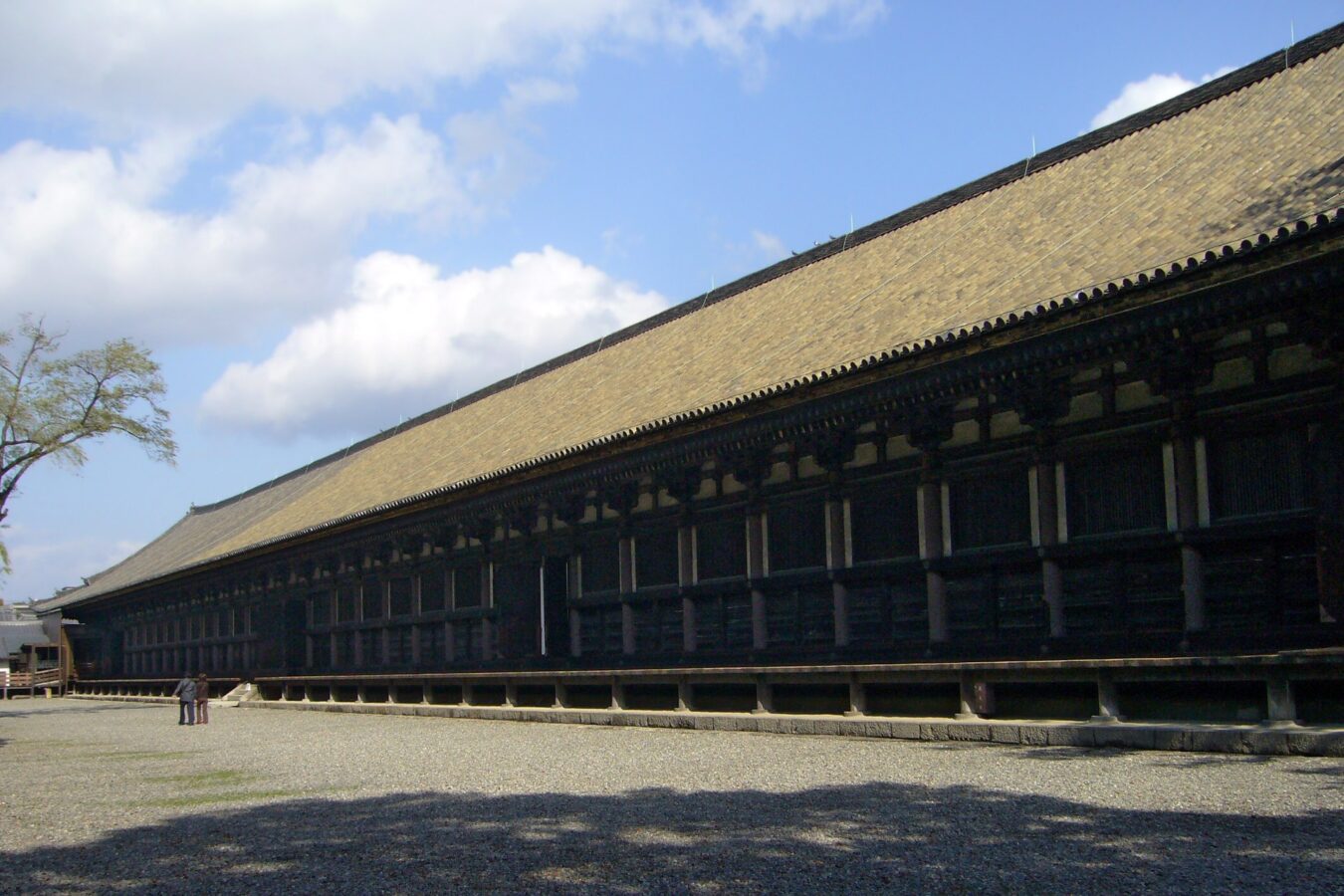
Sanjūsangen-dō, the “Temple of Thirty-Three Bays”, is named for its main hall, a building of remarkable length from 1266 that is a National Treasure. Inside is the reason people come: 1,001 standing statues of the Thousand-armed Kannon, 28 standing attendants, the wind and thunder gods Fūjin and Raijin, and a great seated Thousand-armed Kannon as the principal image — every one of them a National Treasure, most from the Heian and Kamakura periods. The temple was founded in 1164 by Taira no Kiyomori for the retired Emperor Go-Shirakawa, and it belongs to the Tendai school.
It closes earlier in winter than in summer, with tickets stopping 30 minutes before closing. Shichijō Station on the Keihan Line is about 400 m away in a straight line.
Chishaku-in is just 0.4 km away, Tōfuku-ji 1.2 km and Kiyomizu-dera 1.4 km.
Written by japan-spots.com (2026-09-22) from the sources credited on this page. Distances are straight lines between map positions.
Photos
Photos from Wikimedia Commons, each under its own licence — see credits
- Sanjusangendo temple01s1408 — 663highland · CC BY 2.5 · source · resized
- Sanjūsangen-dō in 2013-5-3 No,10 — Mti · CC BY-SA 3.0 · source · resized
- Sanjūsangen-dō in 2013-5-3 No,12 — Mti · CC BY-SA 3.0 · source · resized
- Sanjūsangen-dō in 2013-5-3 No,15 — Mti · CC BY-SA 3.0 · source · resized
- Sanjūsangen-dō in 2013-5-3 No,2 — Mti · CC BY-SA 3.0 · source · resized
- Sanjūsangen-dō in 2013-5-3 No,5 — Mti · CC BY-SA 3.0 · source · resized
- Sanjūsangen-dō in 2013-5-3 No,8 — Mti · CC BY-SA 3.0 · source · resized
What this place is
Sanjūsangen-dō (三十三間堂; Temple of thirty-three bays) is a Buddhist temple of the Tendai sect in the Higashiyama district of Kyoto, Japan. The temple was founded in 1164 by Taira no Kiyomori for the cloistered Emperor Go-Shirakawa. It is officially known as Rengeō-in (蓮華王院; hall of the Lotus King) and belongs to the Myōhō-in temple complex. Sanjūsangen-dō is most famous for its massively long hondō (main hall) dating from 1266 (Kamakura period) and designated a National Treasure of Japan, and the collection of sculptures it houses, including 1001 standing Thousand-armed Kannon, 28 standing attendants, a statue of Fūjin and a statue of Raijin, and the principal image of the temple, a big seated statue of Thousand-armed Kannon, all of them designated National Treasures in the category of sculptures, most of them dating to the Heian to Kamakura periods.
Visitor information checked: 2026-09-15 · Sanjūsangen-dō: visiting information
Background text from Wikipedia (CC BY-SA 4.0)
What to expect at this type of place: Temple
Nearby station
Nearby station: Shichijō (Keihan Main Line), about 400 m from the spot in a straight line.
Worked out on 2026-09-14 from this place’s map position, using HeartRails Express station data and station names from Wikidata. The distance is a straight line, not a walking route, and says nothing about buses, transfers or timetables — plan the trip on Google Maps.
Where to stay nearby
Hotels near Sanjūsangen-dō on Agoda
AD Affiliate link: if you book through it, we may earn a commission from Agoda, at no extra cost to you. Hotels, prices and availability are Agoda’s, for the whole town around this spot.
Traveler reviews
No reviews yet — be the first to share how it went.